HOTA · HOME OF THE ARTS · GOLD COAST
After The Golden Hour
THE ART OF BRETT MOFFATT
A solo exhibition of paintings, photographs and drawings
6 – 7 NOVEMBER 2027
After The Golden Hour examines glamour—what it gave, what it cost, and why it is still worth loving.
Hollywood built the most sophisticated image-making culture the world has produced, and it was built on women. That machinery didn’t disappear when the studios did. The women in these paintings are not its victims and not its advertisements; they went through it and came out the other side still holding the line. What’s harder to find now is the romance: the belief that beauty means something, that mystery is worth keeping. The devotion in the paint is the argument.
The true subject of the exhibition is not any single woman. It is the distance between the image and the person.
The exhibition unfolds in six movements. By the time the viewer reaches the final wall, the radiant faces at the entrance have been quietly reframed—they were always already elegies. This is the terrain of Romantic Noir.
WHERE IT BEGINS
In 1925 Charles Chauvel offered my grandmother a part in a film. She was twenty. Her fiancé forbade it, and the role she never played became the story my mother and grandmother both told me.
THE CENTRE OF THE EXHIBITION
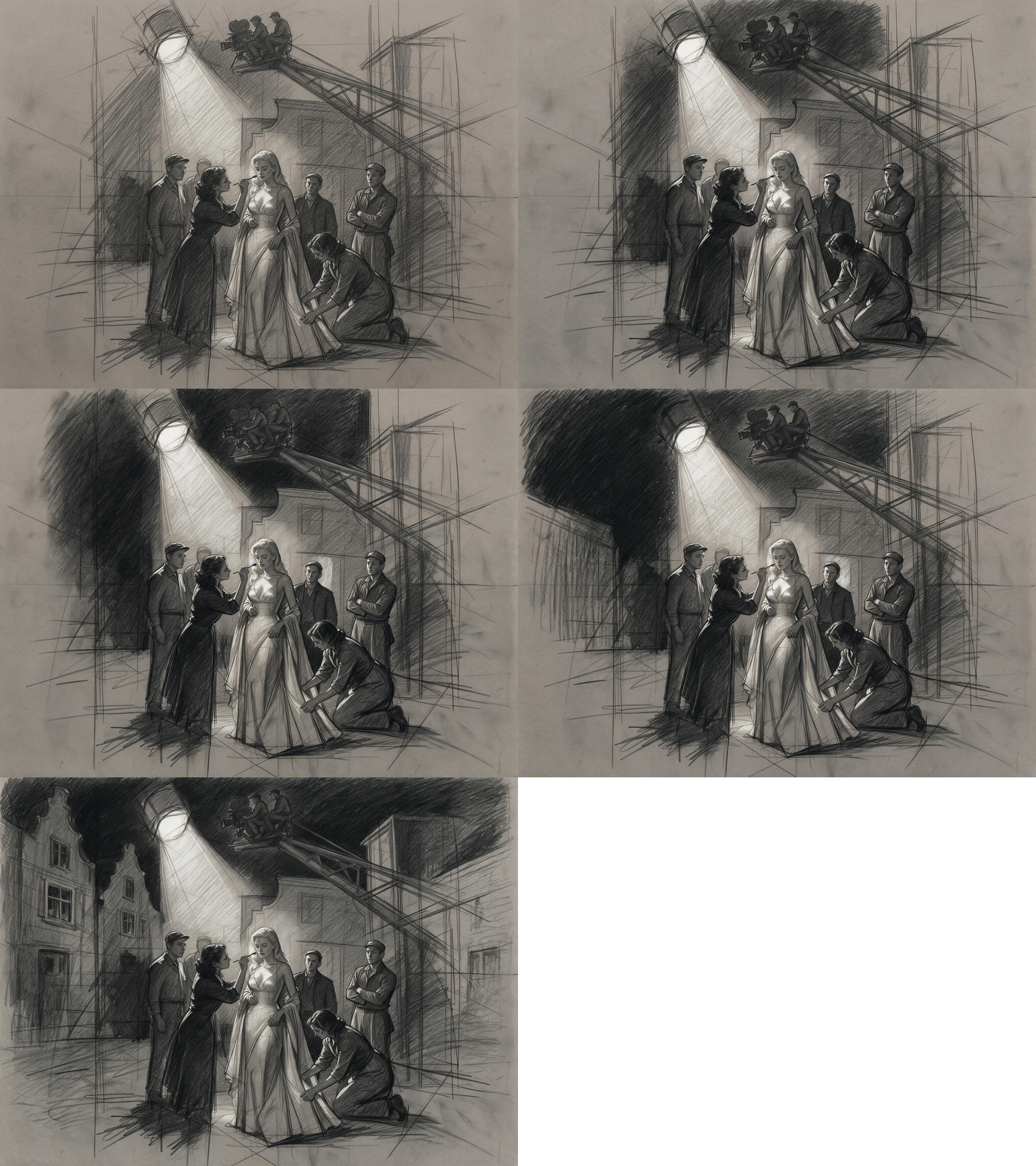
The Alchemists
A night shoot on a backlot, an actress standing in the arc light while the crew build her in real time—wardrobe, make-up, the wind machine. The crew are the alchemists; she is the gold.
The Alchemists · oil on linen · 36 × 60 in
MOVEMENT I
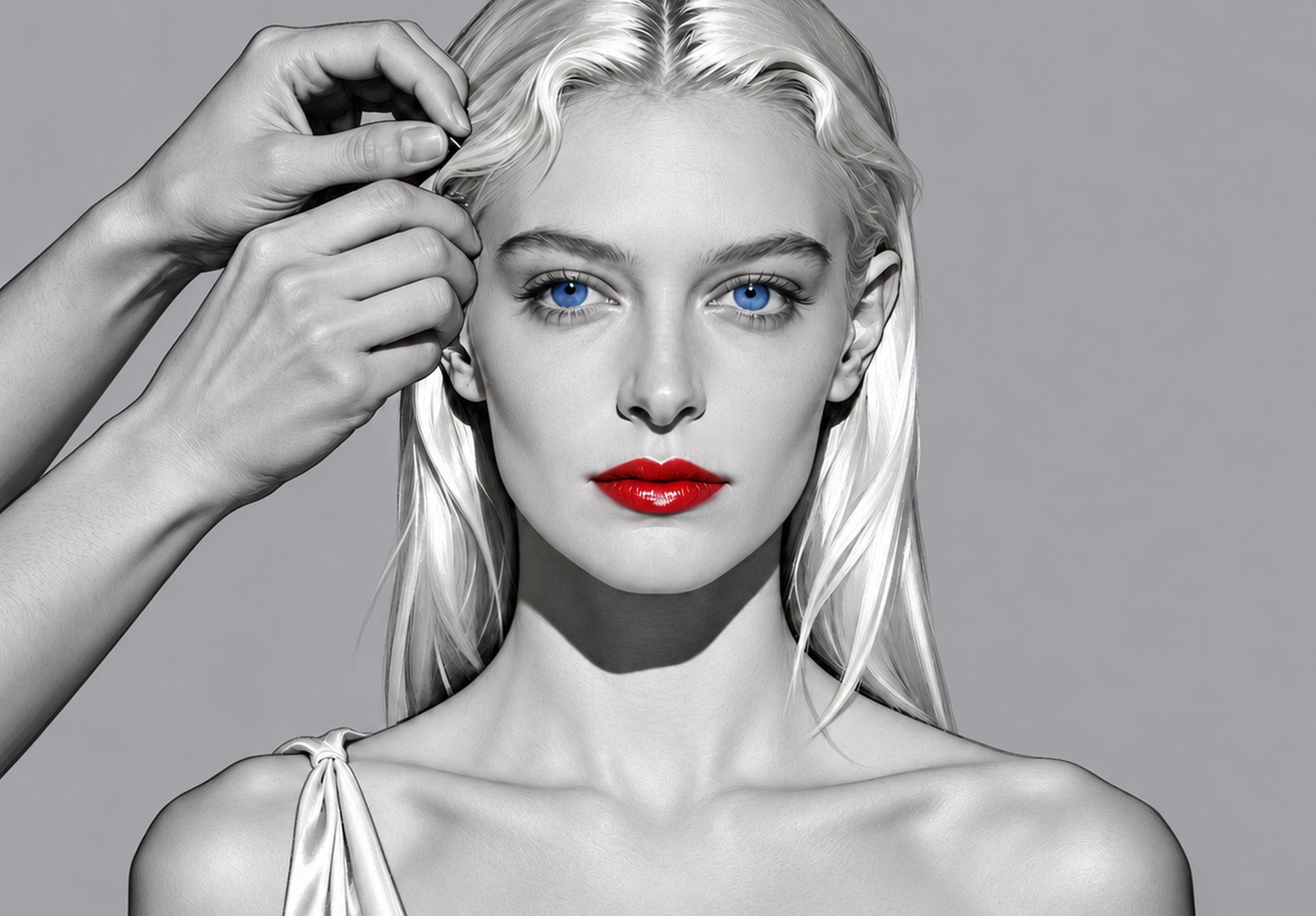
Screen Test
Monochrome, at or above life size, with only the lips and eyes carrying colour. A threshold the viewer must walk past before anything else begins.
The screen test was the first judgement—the moment a person was assessed for her suitability as an image. Colour is withheld everywhere but the mouth and the eyes, the two things the camera was asked to sell. At this scale the assessment reverses: you are the one being looked at.
Screen Test — Christine “Kiki” Delacroix (detail) · oil on linen · 48 × 48 in
MOVEMENT II
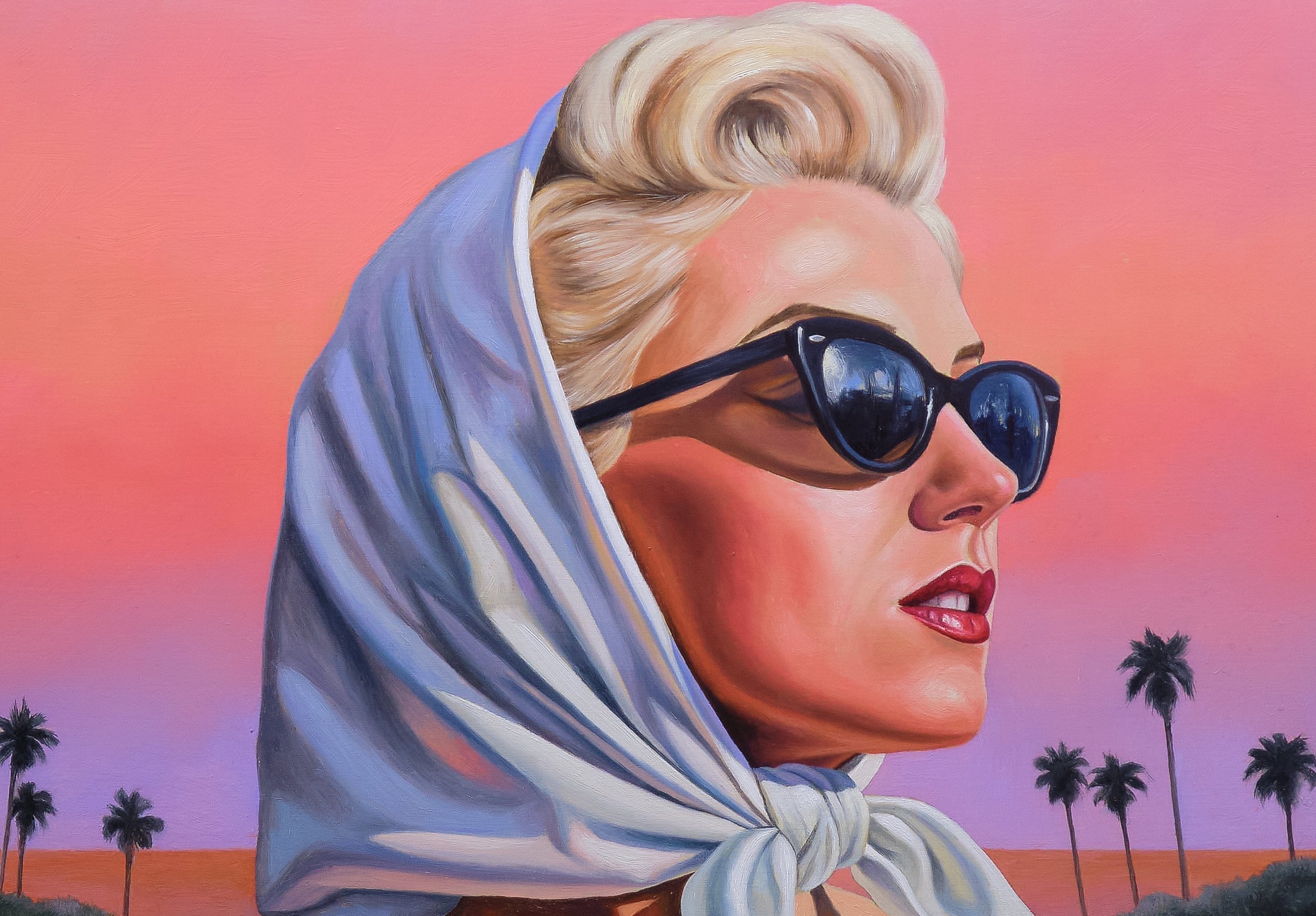
Surface
Surface is glamour as it was broadcast—the icon at full wattage, the image as the culture received and consumed it.
These are painted without irony, at the pitch the studios intended. The seduction has to be real, or nothing that follows carries any weight—you cannot count the cost of something you were never shown the value of. This is the room where the machine is working perfectly.
Afterglow (detail) · oil on panel · 2026
MOVEMENT III
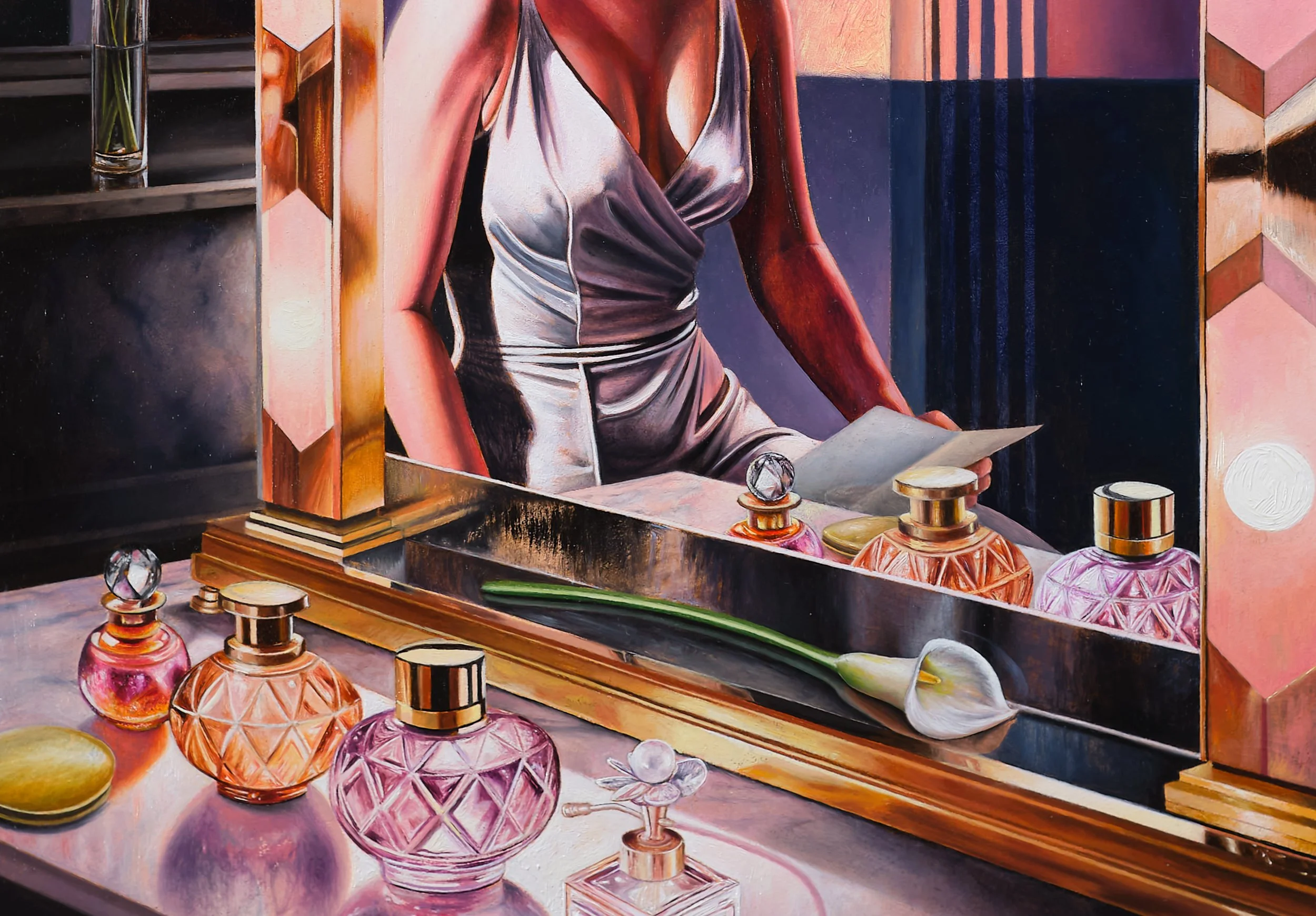
Dressing Room
Dressing Room moves behind that image, into the spaces where it was constructed and maintained—mirrors, perfume, the private composure before the public face.
Glamour was manufactured, by hand, by people with real expertise, and this is where that work becomes visible. The woman in these rooms is both the subject and a worker inside the process. Nothing here is candid: composure is a skill, practised in private before it is spent in public.
The Letter (detail) · oil on panel · 2026
MOVEMENT IV
Film Noir
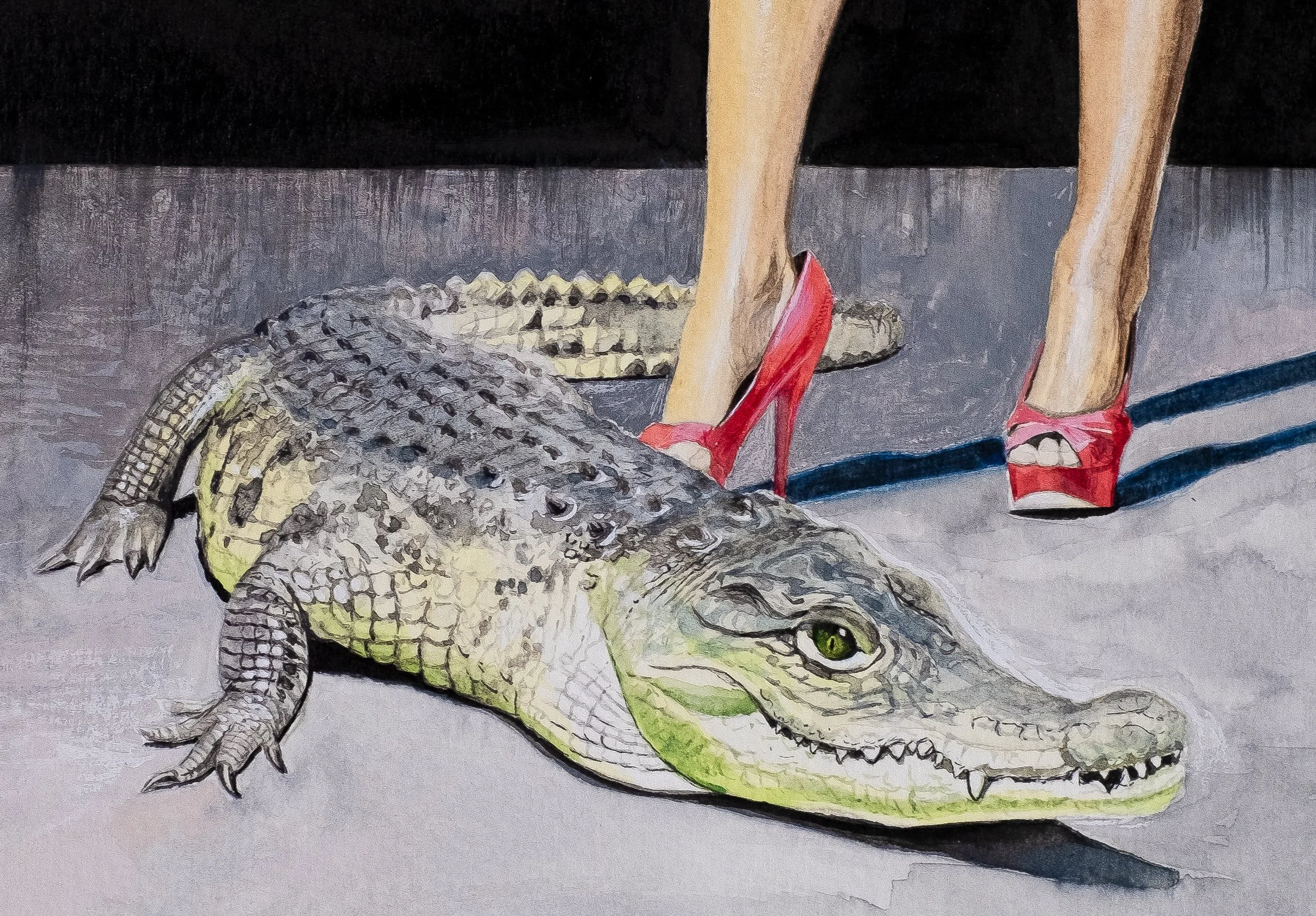
Film Noir returns the woman her agency—knowing, dangerous, meeting the gaze rather than enduring it.
Noir gave women the few roles written with intelligence and appetite, then usually punished them for it by the final reel. These paintings keep the power and withhold the punishment. The look is returned rather than received, and the viewer is no longer entirely safe.
Dangerous Curves Ahead (watercolour study pictured) · oil on linen · 40 × 30 in
MOVEMENT V
Aftermath
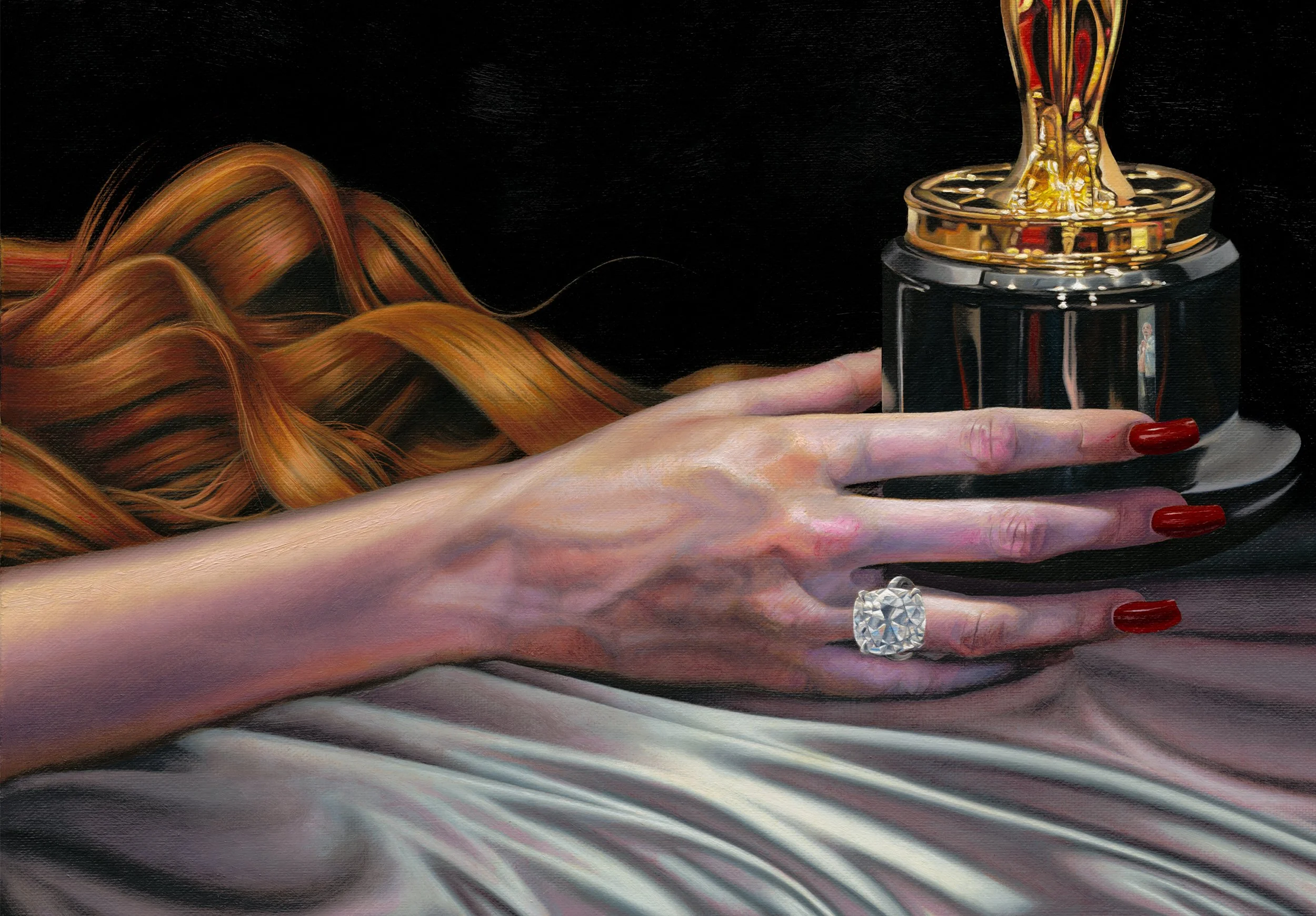
Aftermath is what remains when the performance ends: the objects, the relics, the emptied rooms, the light going.
These are vanitas paintings. The lipstick, the statuette, the abandoned glass outlast the woman who used them, and they are what the industry leaves behind when it has finished with someone. The cost is only ever visible once the audience has gone home.
A Hollywood Still Life (detail) · oil on canvas on panel · 2021
MOVEMENT VI · THE CODA
Nocturne
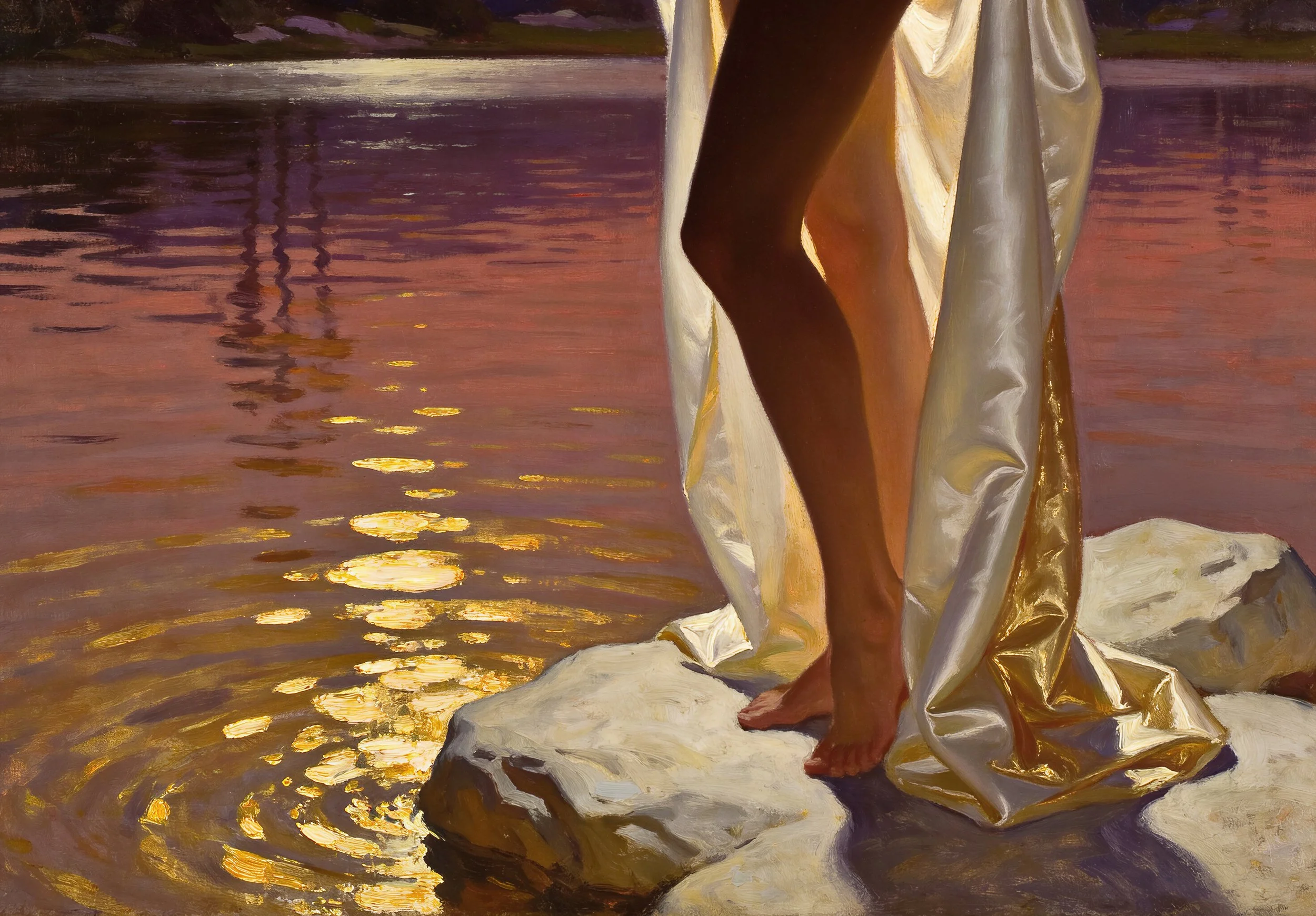
Moonlit bathers, released into their own light. The last image the viewer carries out of the building.
There is no camera here, no audience, no one to perform for. It is the only point in the exhibition where the women are unobserved, and the only light that was not arranged by somebody. Not an escape from the machinery so much as proof that there was always a person inside it.
Untitled (detail) · oil on linen · 2026
THE EXPERIENCE
A room, not a wall
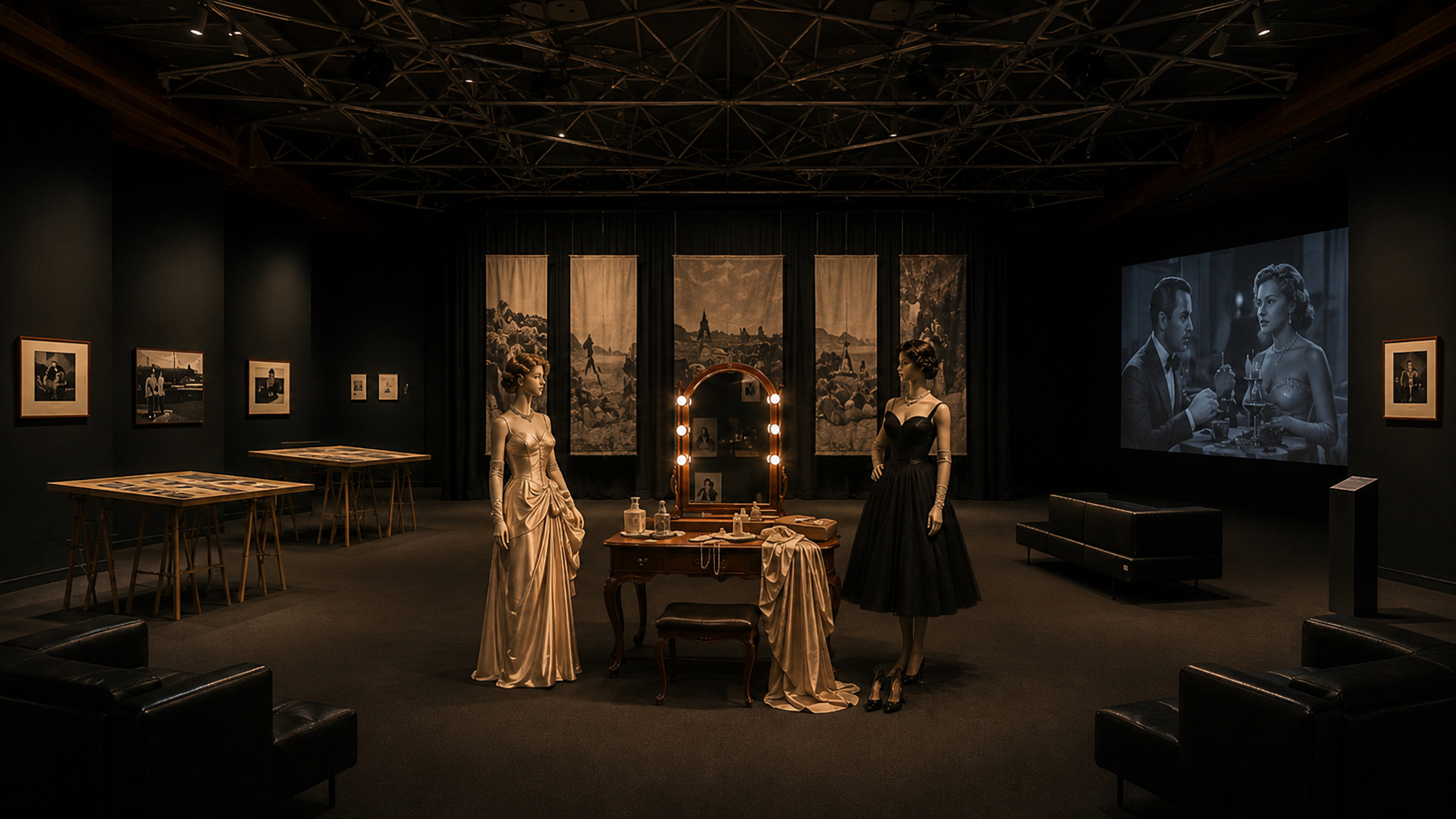
After The Golden Hour occupies a single large room, staged rather than simply hung. The six movements are groupings within that room, and the environment they sit in—the low light, the staged objects, the period furniture—is part of the exhibition rather than a setting for it.
The paintings are large, and you are meant to stand close—close enough to watch the brushwork decide where the light falls, close enough that the woman in the frame is near life-size and her look arrives at your own eye level.
Among them sit the photographs, drawings and working sheets that produced them. They are not documentation hung as a courtesy. They are the evidence that the glamour on these walls was manufactured by hand, by people, in rooms like the one you are standing in—which is the whole of what the exhibition is arguing.
Artist’s concept · the installation environment
COMPANION OBJECT
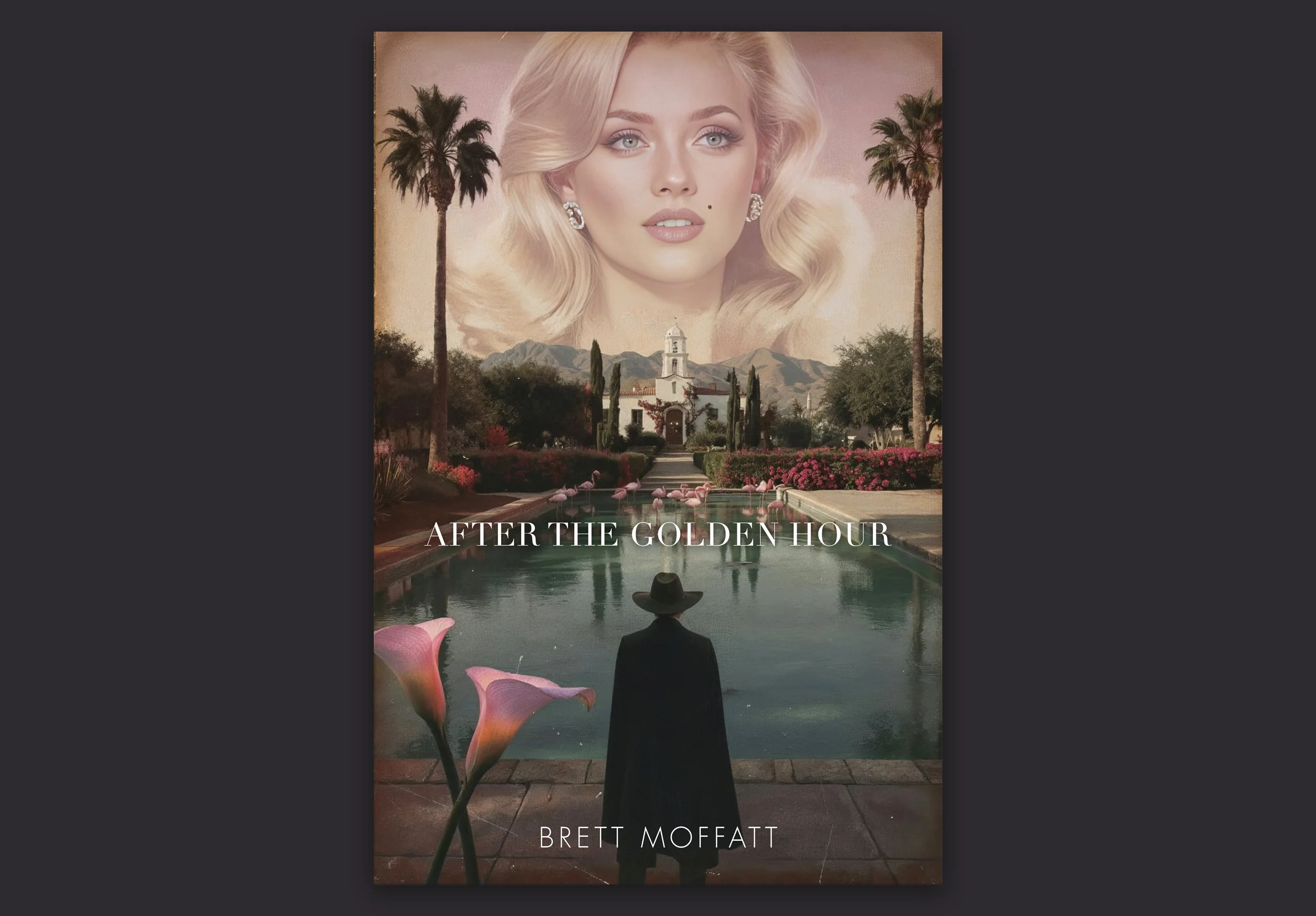
The Novel
The novel follows one woman through the world of the golden hour; the exhibition paints the world itself.
Evelyn St Clair is a fictional starlet of the 1950s, and hers is the single life these paintings only glimpse. She surfaces in a handful of works like a figure seen between rooms—an apparition rather than a protagonist, since the exhibition is not her story. Either stands alone; read together, the world on these walls acquires someone to follow through it.
After The Golden Hour · a novel · Evelyn St Clair, 1929–2024
MONOGRAPH
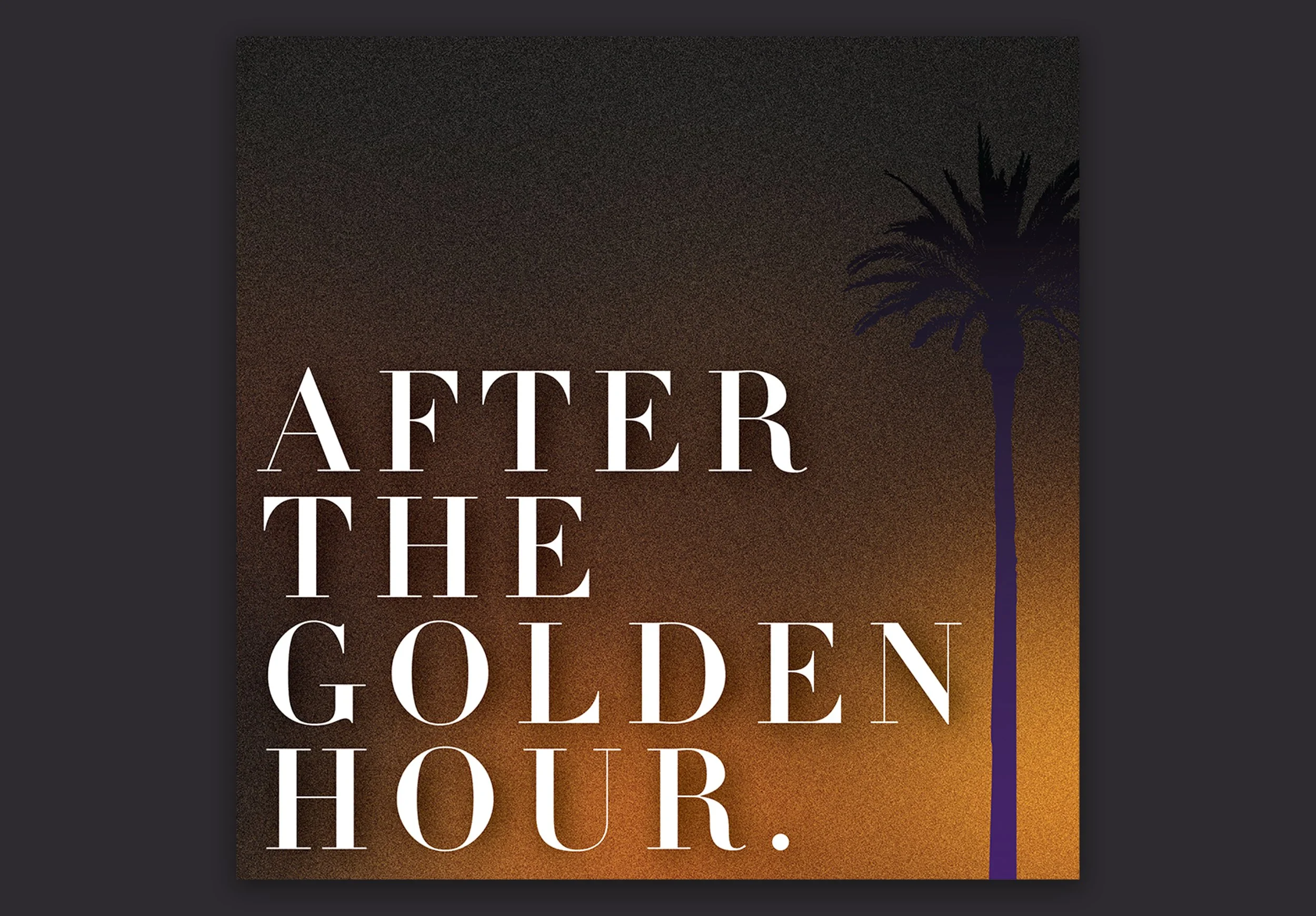
The Catalogue
Conceived as a monograph—the fullest statement of the project.
Three voices, each holding one territory. Charles Casillo’s foreword gives the woman behind the image—the unguarded moment after the performance ends. April Clemmer’s essay gives what that image gave back: the craft that built it, and the way its glamour reached ordinary women as permission to step outside themselves. My own essays hold the making, the cost, and the romantic’s position.
After The Golden Hour: The Art of Brett Moffatt · catalogue
Brett Moffatt
An Australian painter and photographer working between Brisbane and the Gold Coast, trained first in the technical crafts of screen glamour and exhibiting since 1993. His painting and photography explore the visual intelligence of Hollywood’s golden age through the sensibility he calls Romantic Noir.