MOVEMENT II
Surface
Surface is glamour as it was broadcast—the icon at full wattage, the image as the culture received and consumed it.
These are painted without irony, at the pitch the studios intended. The seduction has to be real, or nothing that follows carries any weight—you cannot count the cost of something you were never shown the value of. This is the room where the machine is working perfectly.
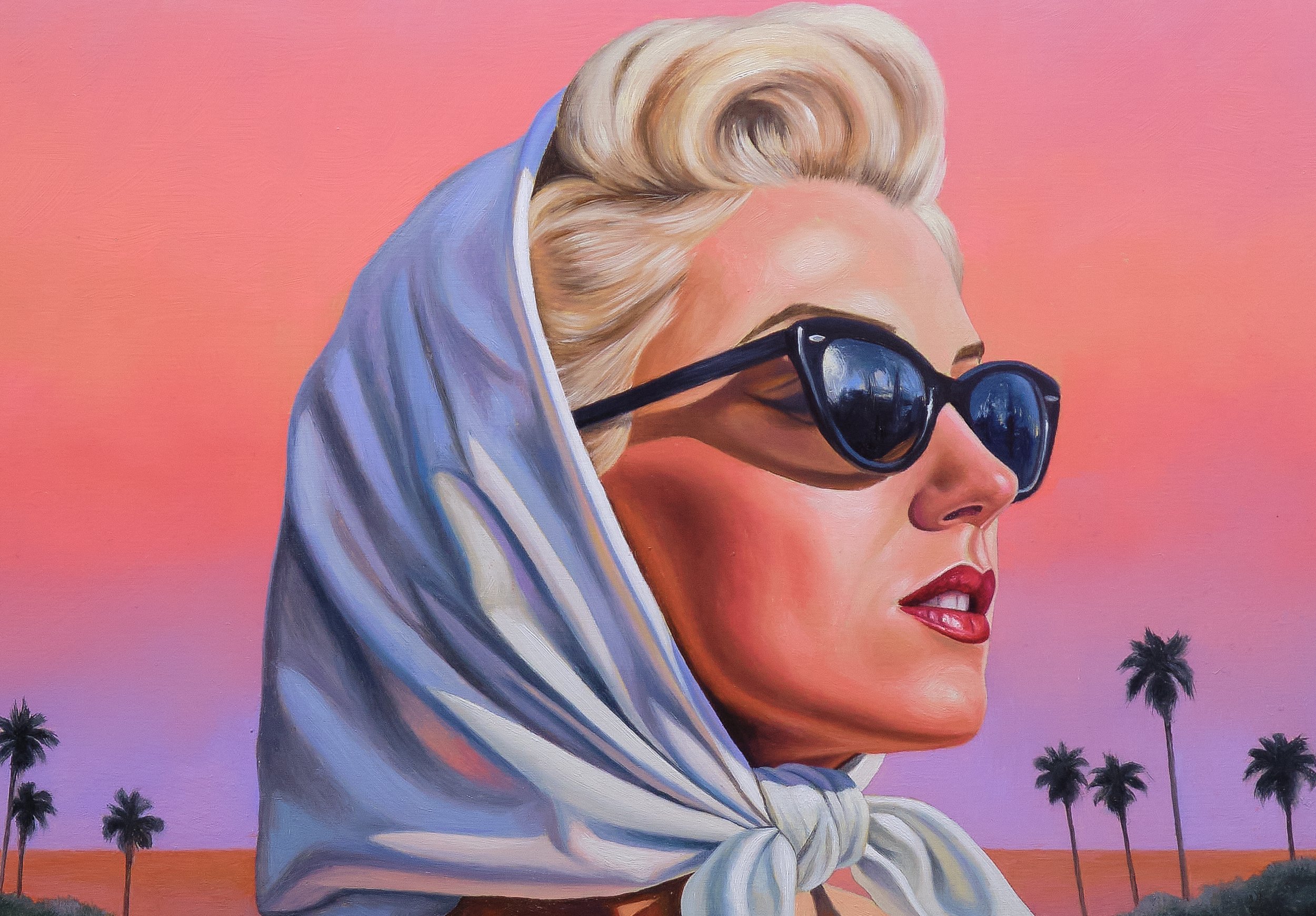
Afterglow (detail) · oil on panel · 2026
Surface is the easiest movement to misread. These are the paintings that look most like the thing they are about — the lit face, the perfect skin, the colour pushed to the pitch a studio publicity department would have approved. There is no visible critique in them. That is deliberate, and it is the most difficult decision in the exhibition.
The argument only works if the seduction is real. If the glamour here were undercut — made sour, made camp, made obviously hollow — then everything that follows would be arguing against a straw man. You cannot count the cost of something you were never shown the value of. So this room is the machine working perfectly: the image as it was broadcast, as it was received, as it was wanted.
It is worth remembering how much labour sits inside one of these faces. A studio portrait of the 1940s is the output of a department: a cinematographer’s lighting plan, a makeup artist’s two hours, a costume designer’s cutting, a retoucher’s pencil on the negative, and a young woman holding a position until her eyes watered. Nothing you are looking at is accidental, and almost none of it is her.
What you are meant to feel in front of these is the pull. Not scepticism — the pull. The exhibition goes on to take that apart, but it cannot take apart something you did not first want.
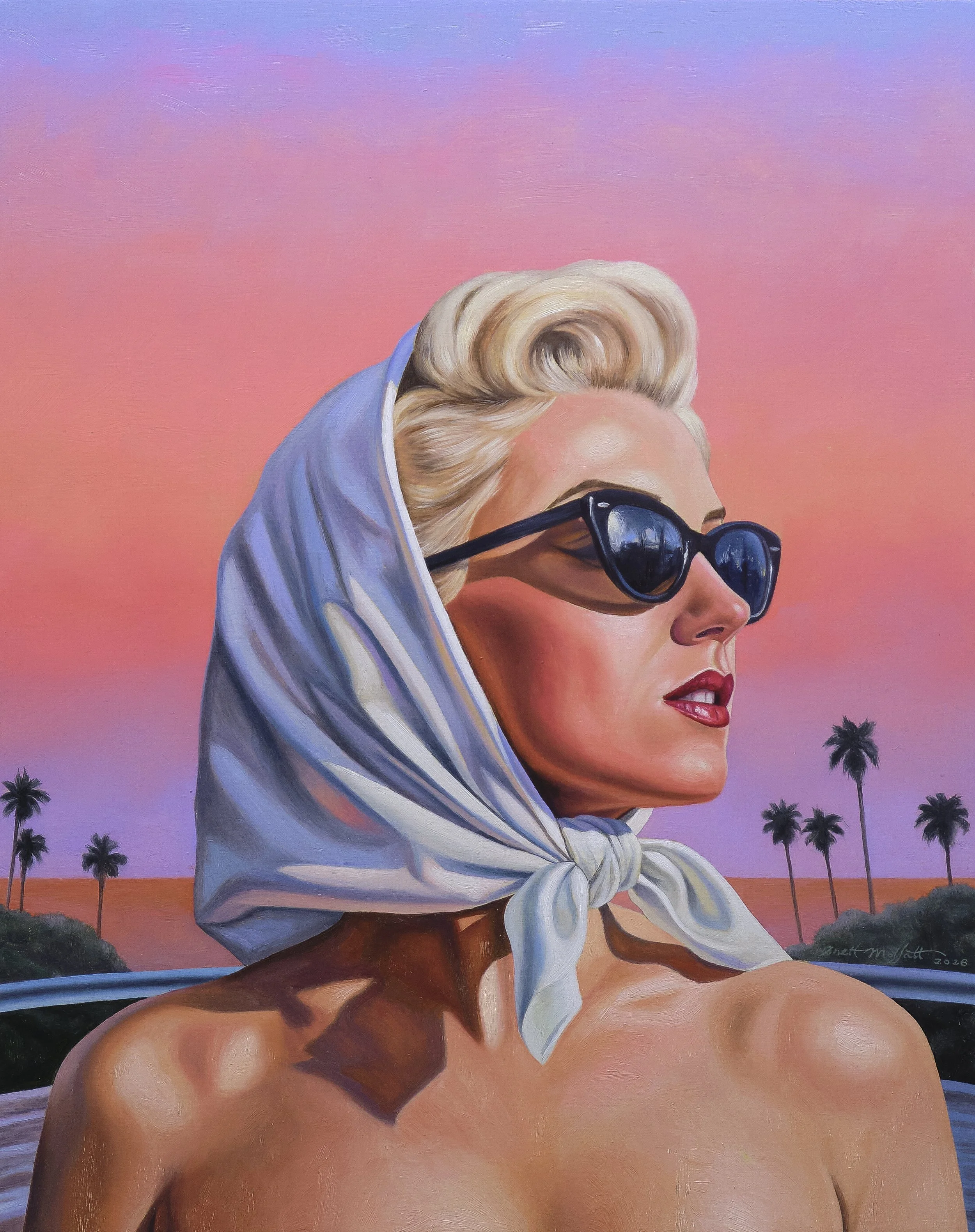
Afterglow · oil on panel · 25 cm x 20 cm · 2026
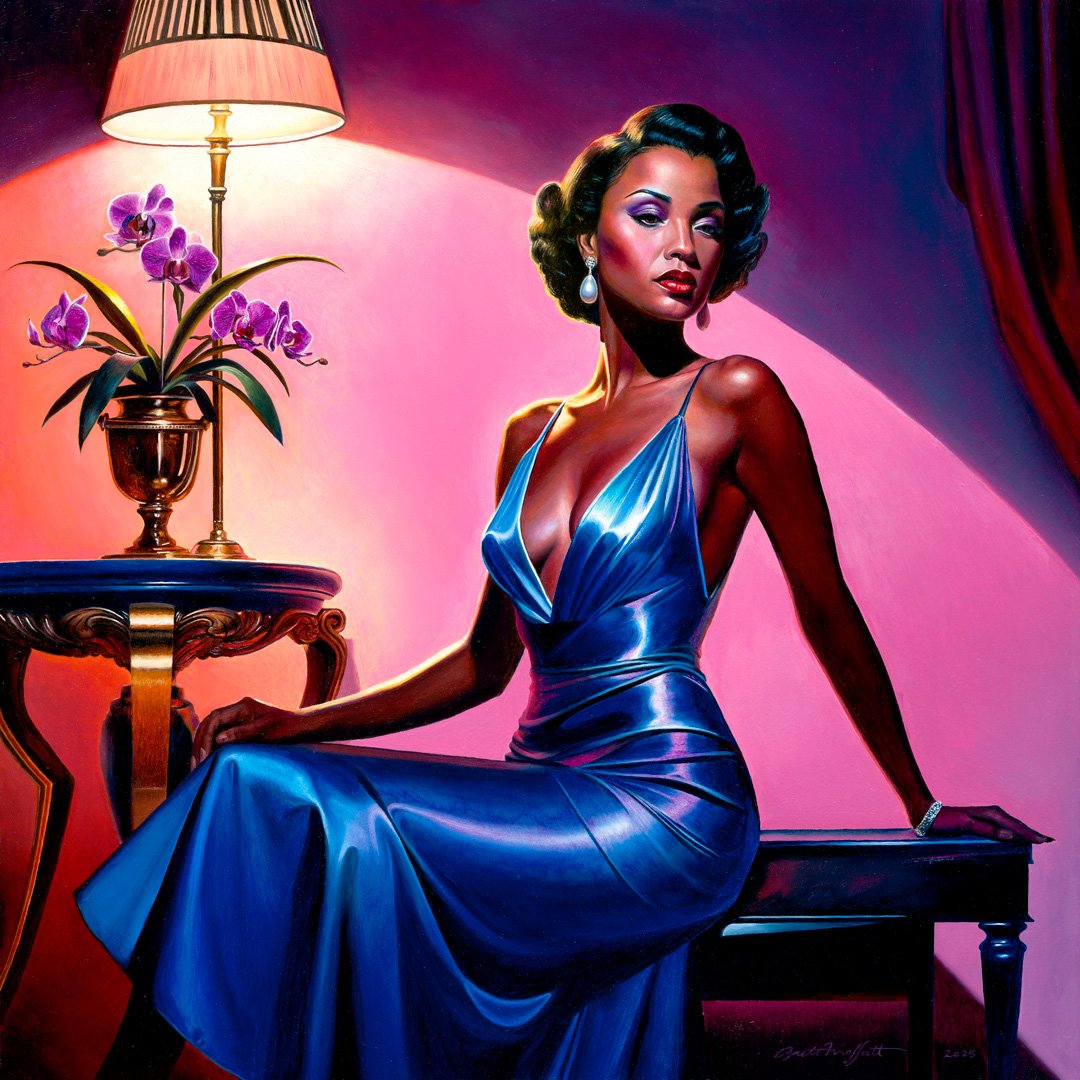
Renaissance Woman · oil on panel · 30 cm x 30 cm · 2026
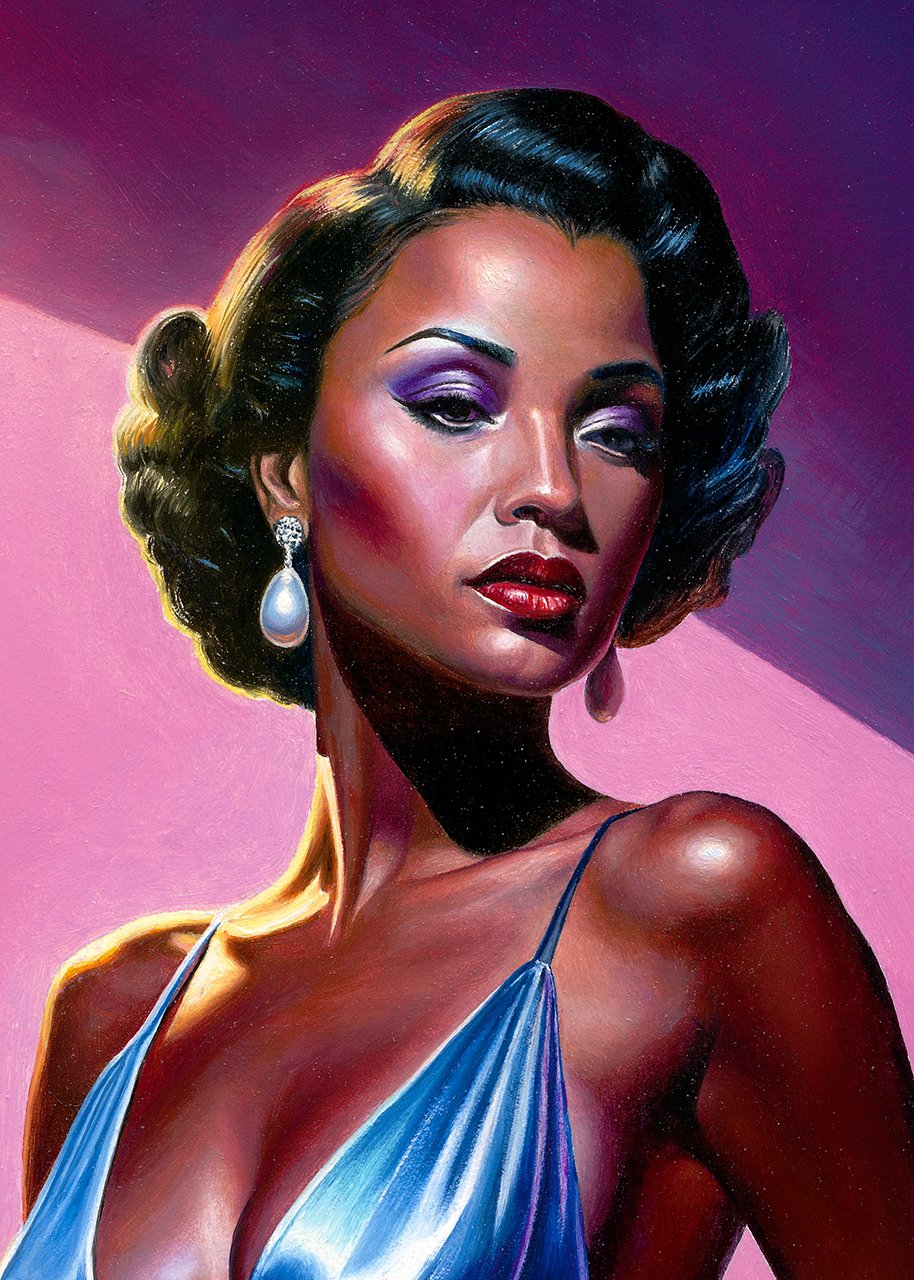
Renaissance Woman (detail) · oil on panel · 30 cm x 30 cm · 2026
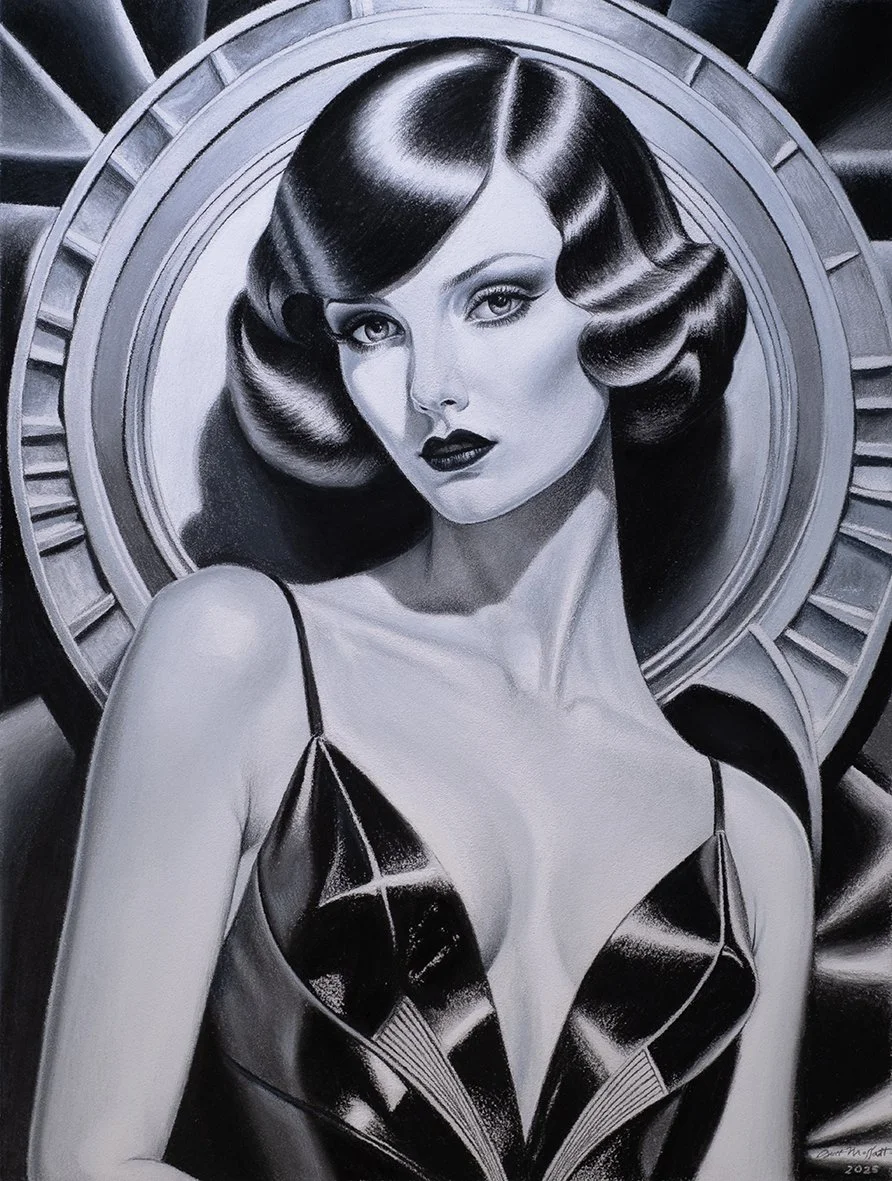
Kit Kat Electric · Charcoal and Pastel on paper · 2026
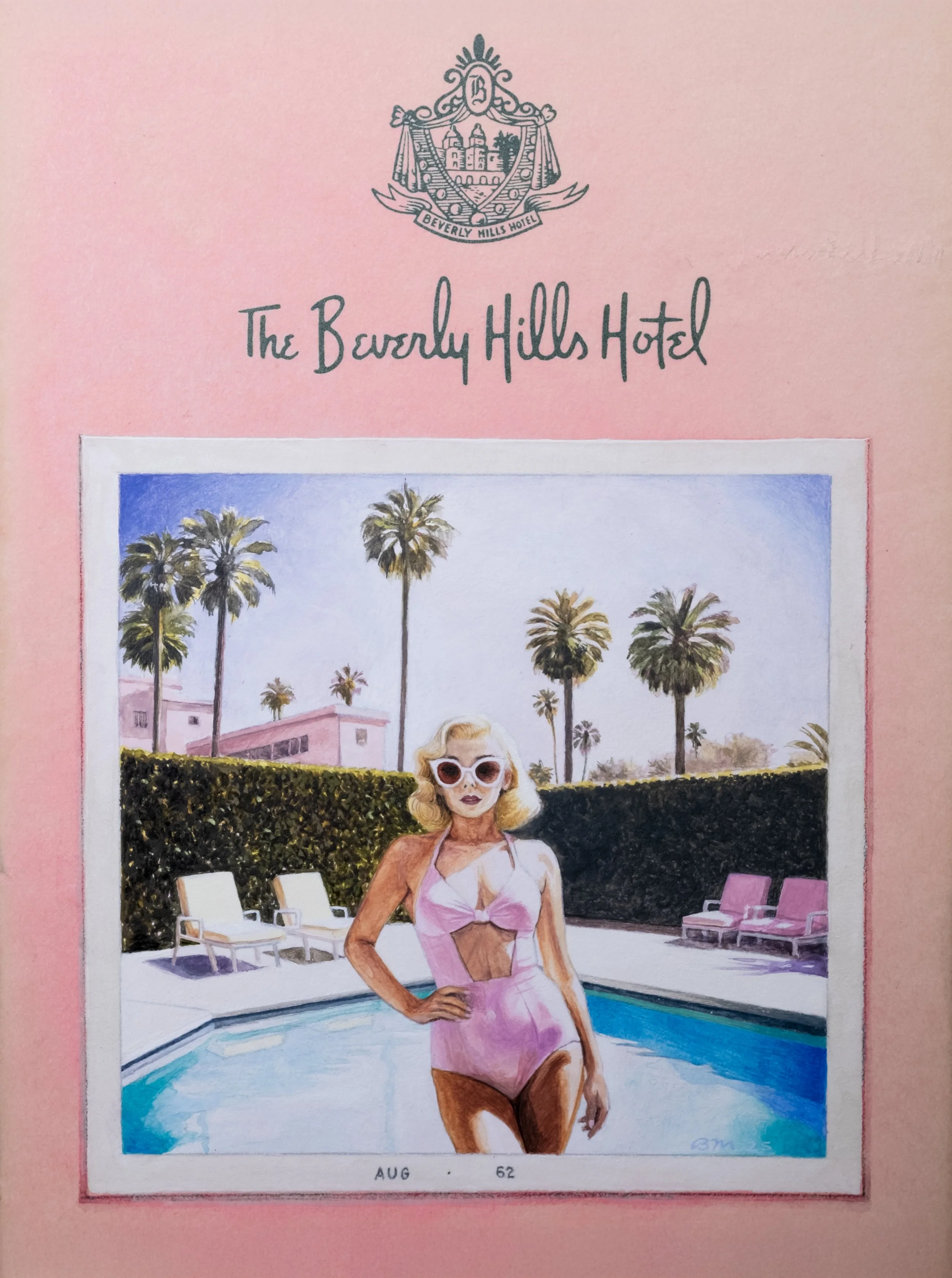
Letter from the Pink Palace · Watercolour on The Beverly Hills Hotel notepaper, circa 1962 · 2026