MONOGRAPH
The Catalogue
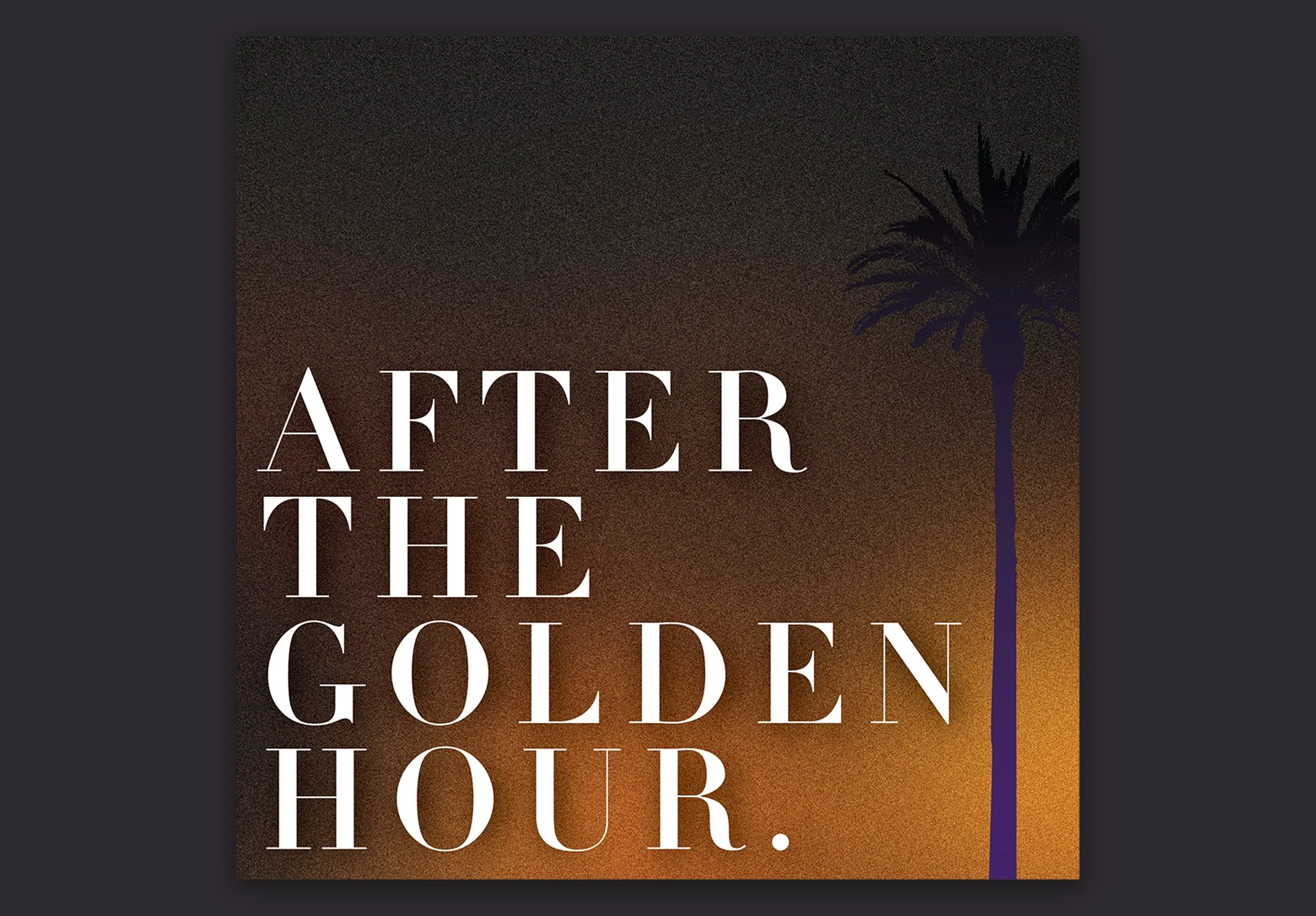
Conceived as a monograph—the fullest statement of the project. With a foreword by Charles Casillo and an essay by April Clemmer.
After The Golden Hour: The Art of Brett Moffatt · catalogue
The fullest statement
Beyond the foreword and the essay, the catalogue carries my own writing: a curatorial statement, an account of how the work is made, an argument for beauty as a legitimate subject, and the case that beneath Hollywood’s famous images lies a working intelligence we are in the process of losing. Together they set out, in one place and in plain terms, the position the paintings are made from.
There is also an inheritance in it. My grandmother Lucy was offered a role by Charles Chauvel—the director who gave Errol Flynn his first part—and was not permitted to take it. She told me so herself, and my mother Audrey told it to me the same way: a woman who reached the threshold of the light and was held back at it. I grew up knowing that cinema and longing were tangled in my ancestry, and this body of work is, among other things, the claiming of a story that was never lived.
The catalogue is conceived as a monograph rather than a record of an exhibition—the object that outlasts the show and carries the project to people who never stood in the room. It closes on the line the whole project rests on: what we create in the wake of the golden hour is how we prove the light was real.
FROM THE FOREWORD — CHARLES CASILLO
“When considering the paintings of Brett Moffatt, I begin with a moment we rarely see—and almost never get to keep. It’s the moment after the performance ends. The laughter fades, the pose drops, the lights go down, and something unguarded comes through. It isn’t dramatic, and it isn’t planned. But it’s real.”
“These aren’t portraits of women performing. They’re portraits of women in between moments—afterward, offstage, unobserved. Sometimes they seem to be remembering. Sometimes bracing. Sometimes simply alone, with no one left to acknowledge them.”
“I’ve always recognized the stars at their most luminous. Brett loves them in the moment just after—when the light softens, when the mask lowers, when the woman remains. That’s the moment I’ve been waiting for all along.”
Charles Casillo is the author of Marilyn Monroe: The Private Life of a Public Icon and Elizabeth and Monty: The Untold Story of Their Intimate Friendship. His foreword opens the catalogue.
FROM THE ESSAYS — BRETT MOFFATT
“This is Romantic Noir. It is the understanding that great effort and great achievement—the magnificent glory and beauty that often accompany them—are inseparable from sacrifice, hurt, struggle, and often tragedy. The darkness is what makes the light visible. The shadow is what gives the luminance its shape.”
“The machinery that manufactured ‘starlets’ in the 1940s didn’t disappear—it evolved. The photoshoots that once occurred under controlled studio lights now happen daily on Instagram. The screen tests that determined which faces and bodies would be marketable have become the endless scroll of comparison and judgment. Young women still arrive with dreams, still believe beauty will save them, still learn—often devastatingly—the actual price of visibility.”
“These paintings are my argument for beauty in an age that fears it as weakness. They are my insistence that sophistication and sincerity can coexist, that craft and feeling are not opposites, that elegant mystery is worth preserving in an age of constant exposure.”