The part my grandmother never played
My grandmother told me this story herself, and my mother, Audrey, told it to me the same way. Their testimony is my evidence for all of it. In 1925 my grandmother caught the eye of Charles Chauvel.
If that name means nothing to you, it should mean something. Charles Chauvel was born at Warwick in 1897 and became the most significant Australian filmmaker of his generation — the man who made Forty Thousand Horsemen, and who in 1955 made Jedda, the first Australian feature shot in colour and the first to give its leading roles to Aboriginal actors. His uncle was General Sir Harry Chauvel, who commanded the Light Horse in Palestine. One generation of a Queensland dairy family produced a cavalry general and a film director.
In 1922, at twenty-four, he paid his own way to Hollywood. He did not arrive as anybody. He worked as an extra, a lighting technician, a publicist and a stunt double — which is to say he learned the dream factory from underneath, at the level of the lamps and the falls, where the glamour is manufactured rather than admired. He came home a year later with the only education that mattered.
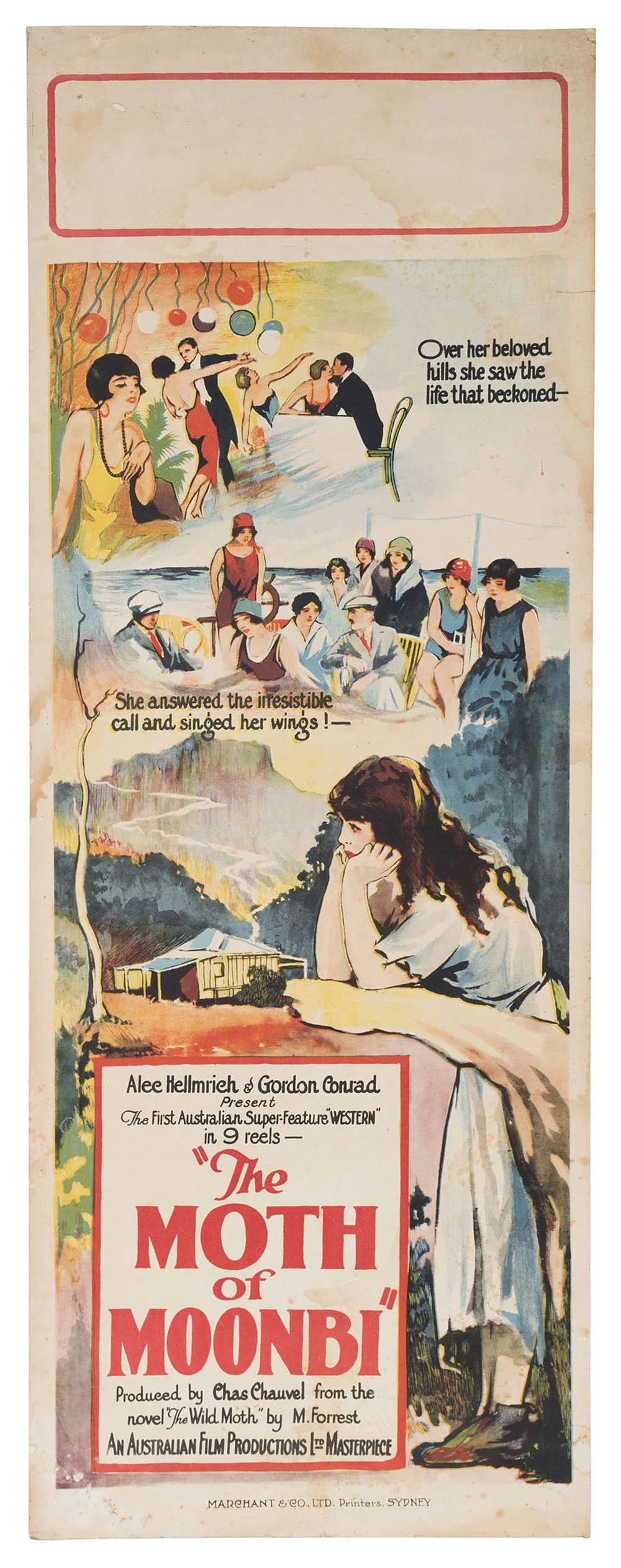
He raised the money for his first feature the hard way, lobbying the Ipswich and Toowoomba chambers of commerce and selling shares at a pound each. Then he went home to shoot it. The Chauvels had a dairy property called Summerlands at Harrisville, and Charles had gone to school at Mutdapilly, a few miles off. He filmed The Moth of Moonbi through 1925 near Spicer’s Peak, at Franklyn Vale cattle station, and in the Rosevale Valley under the mountain they call the Sleeping Assyrian.
My grandmother lived at Mt Walker, which is the next valley over. Her name was Lucy Lucinda Griffiths, and she was twenty years old.
He cast her in it. The film he was making is a melodrama about a country girl, loved by a stockman, who goes to the city, loses everything she has and comes home wiser — a story about the pull between transformation and staying put, which is a joke history did not intend to make.
Her fiancé, August Carl Zahnow, forbade it. That is the end of the story, and it is also the beginning of this one.
The Moth of Moonbi opened on 25 January 1926. On his next picture Chauvel met an actress named Elsa Sylvaney; he married her in 1927, and she worked on every film he made for the rest of his life. One young woman stepped in front of that camera and spent thirty years inside the industry it opened to her. Another was told no, one valley away, the year before.
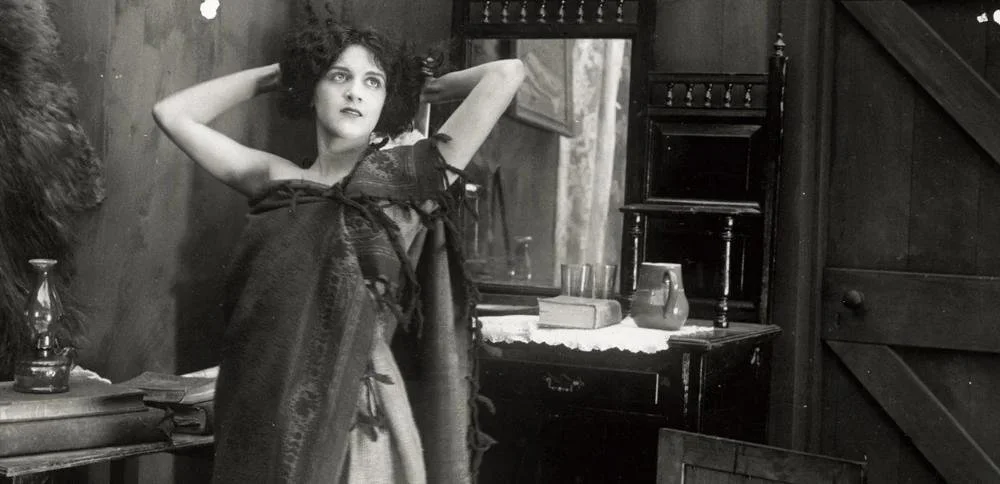
Doris Ashwin as Dell Ferris in The Moth of Moonbi
Seven years after that, Chauvel was casting his first talking picture, In the Wake of the Bounty, and needed a Fletcher Christian. He found a tall, handsome, entirely untrained young man called Errol Flynn — from a photograph in a newspaper story about a wrecked yacht, or on a tip from one of the cast; the accounts disagree. Flynn could barely act, and it shows. It made no difference. Two years later he was Captain Blood and one of the most famous faces on earth. Chauvel had an eye, and being seen by him changed what happened to you.
Lucy married August Zahnow. There are two versions of her and both are true; only one of them happened.
I have painted women on a threshold for years without ever saying plainly why. It is this. The distance between what was and what might have been is the whole of my subject, and I did not choose it — I inherited it from a woman who almost stepped into the light and was held at the door.
We are filming in that country now. Spicer’s Peak, Franklyn Vale, Rosevale, the valley under the Sleeping Assyrian. I flew over it once at nineteen in a twin-engine Beechcraft with film music playing in my head, and understood none of it. This time it is on purpose.
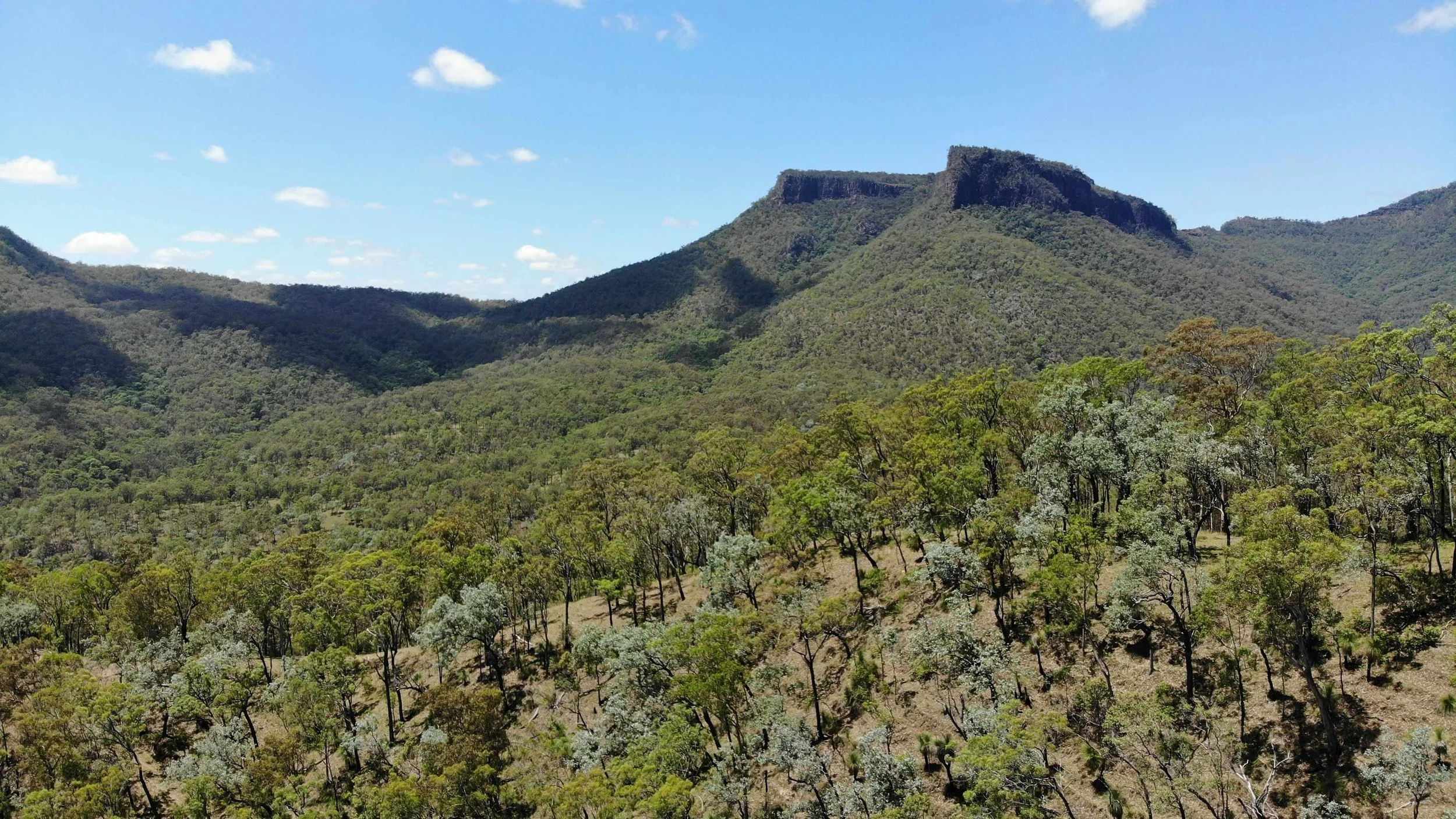
The Sleeping Assyrian / Mount Castle (27°57′43″S, 152°24′10″E)