MOVEMENT III
Dressing Room
Dressing Room moves behind that image, into the spaces where it was constructed and maintained—mirrors, perfume, the private composure before the public face.
Glamour was manufactured, by hand, by people with real expertise, and this is where that work becomes visible. The woman in these rooms is both the subject and a worker inside the process. Nothing here is candid: composure is a skill, practised in private before it is spent in public.
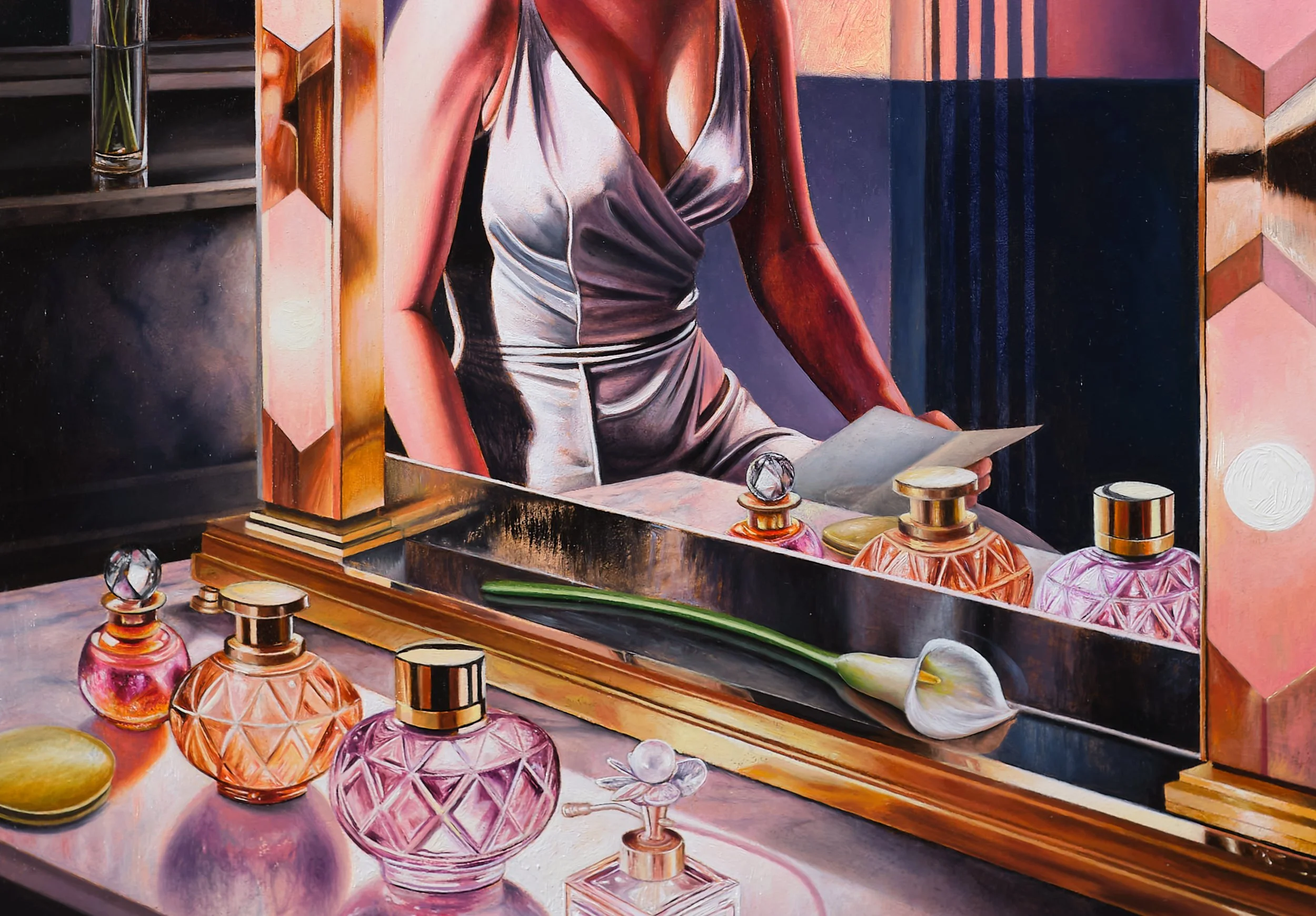
The Letter · oil on panel · 2026
The dressing room is the only part of the industry that was honest about what it was doing. Everyone in that room knew the face was being built. There was no pretence that beauty arrived naturally — there was a call time, a mirror, a chair, and a schedule to meet.
The expertise in those rooms has gone almost entirely unrecorded. Hair was architecture: finger waves set, dried and dressed out so they would hold under a key light and read as waves rather than as a flat grey mass on film. The face was engineering of another kind — Max Factor pancake laid down to give period stock a surface it could actually register. The people who did that work were specialists, and almost none of them are named in any history of the period.
This is also where the photographs in this exhibition were made. The Inchcolm Sessions were shot in a 1930 building in Brisbane with the studio lighting rebuilt from first principles — Fresnels and scrims set to the recipes of Hurrell and Clarence Sinclair Bull, with period costume and period technique — to find out how that light actually behaves on a real body in a real room. The paintings are built from what that taught, not from copying old photographs.
Nothing in these rooms is accidental, which is why they are the most sympathetic part of the exhibition. A woman at a mirror is not being vain. She is at work, doing something difficult, for an audience that will never see the effort and would think less of her if it did.
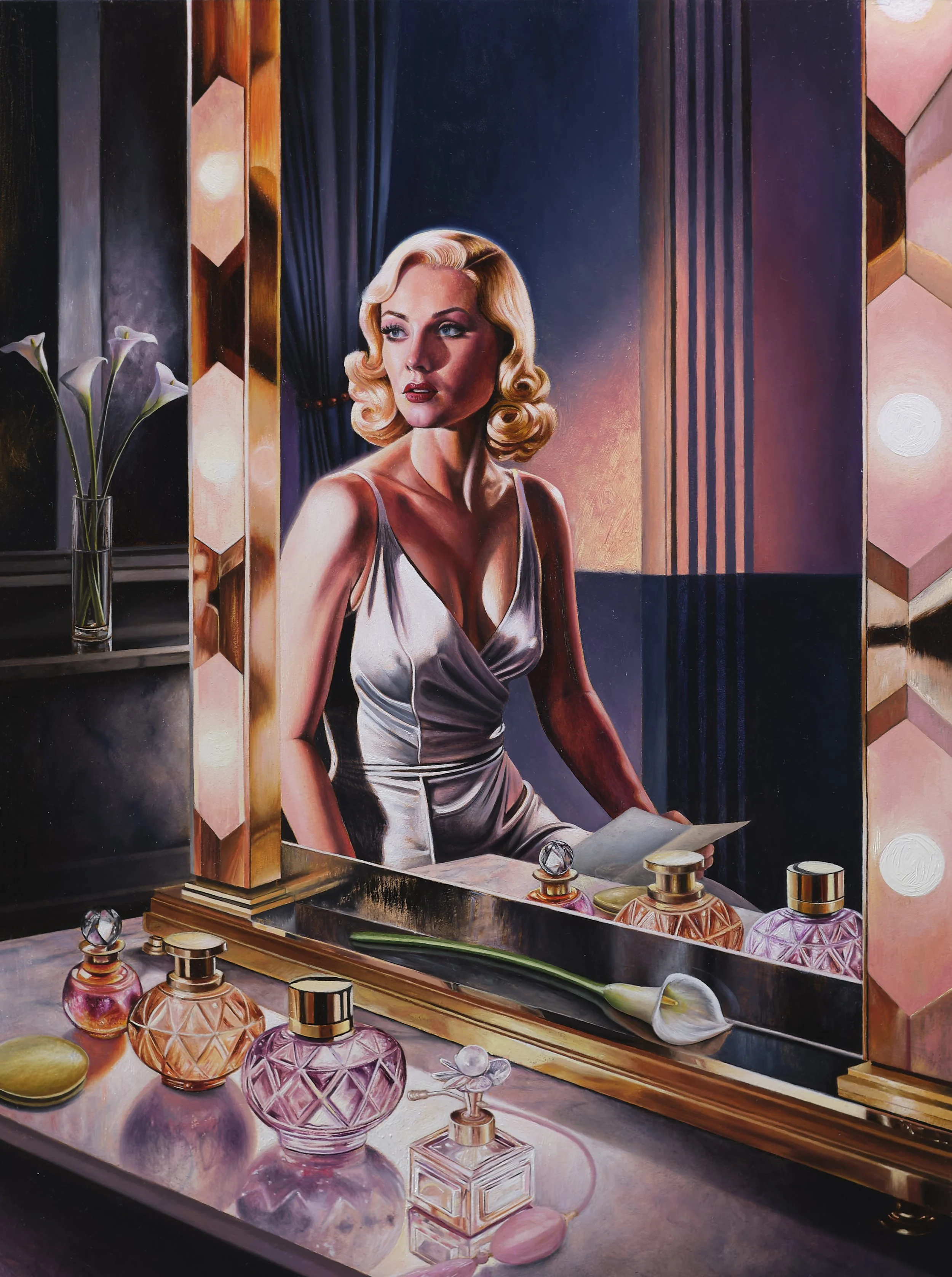
The Letter · oil on panel · 2026
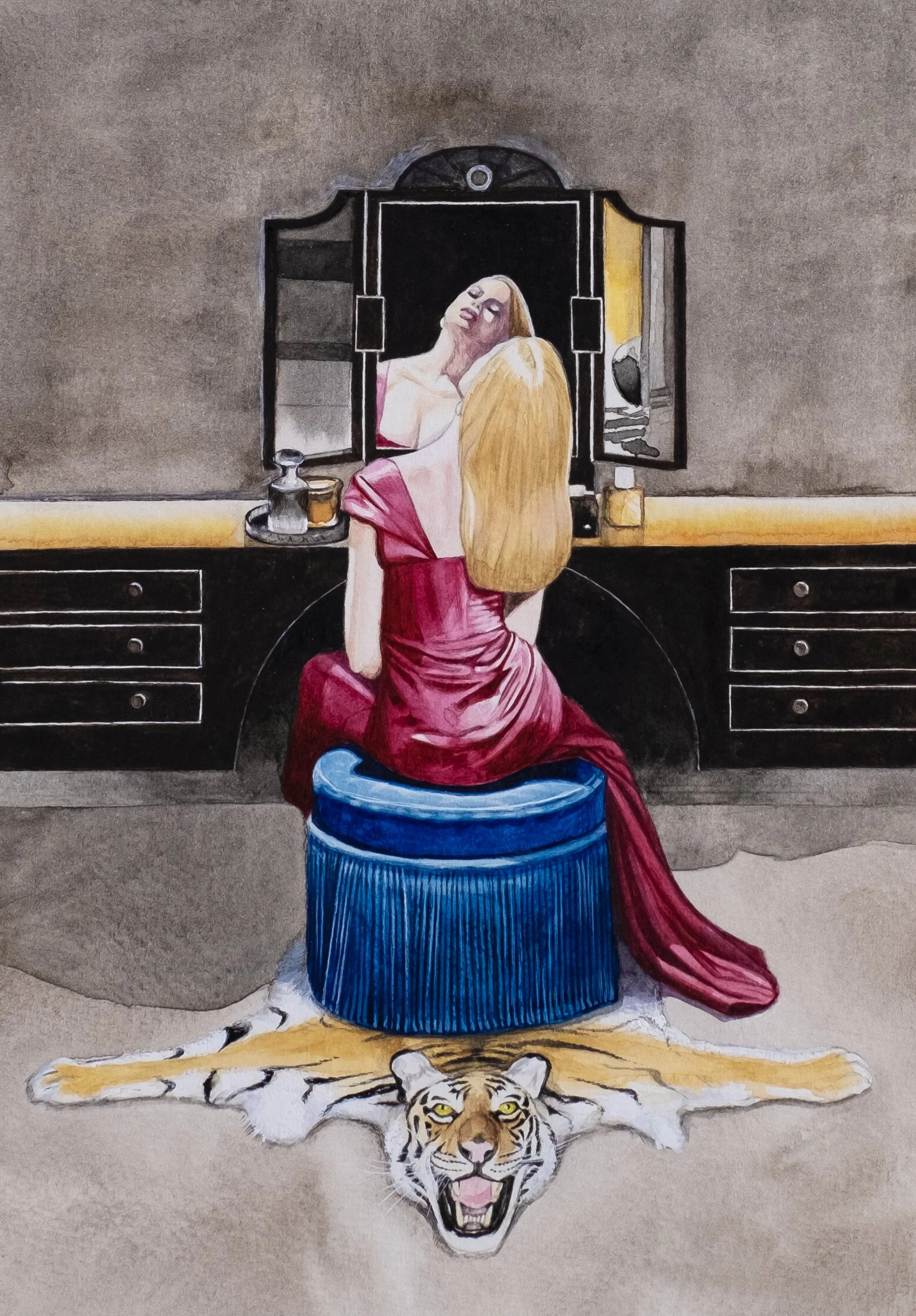
The Diva · Watercolour · 2020
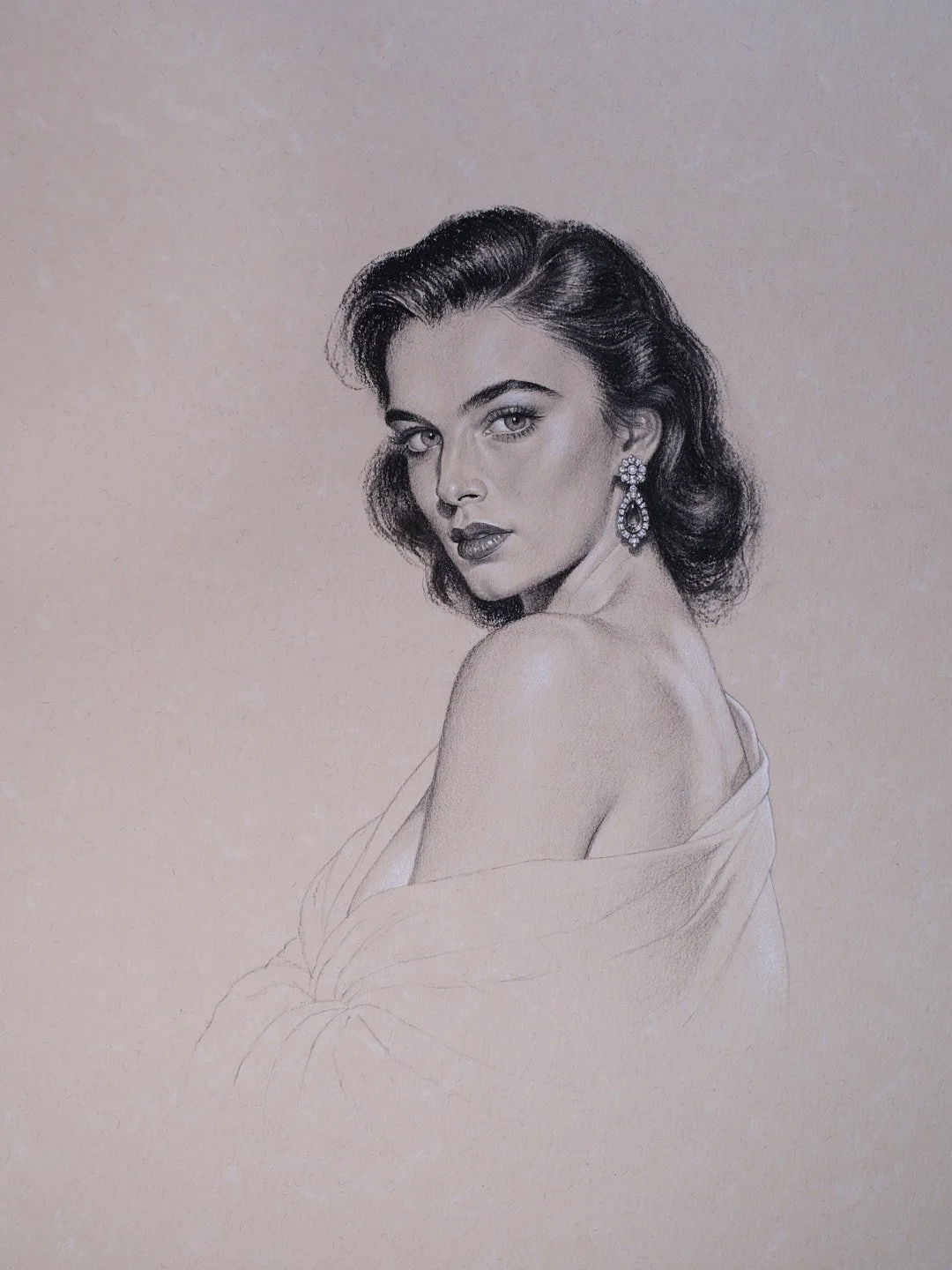
Scarlet · Charcoal and pencil on paper · 2026
The engineering of glamour
The objects of mid-century glamour were engineered. Somebody specified the spiral stitching that gave a bullet bra its line, the bone channels in a girdle, the facet angles on a cut-glass atomiser, the swivel inside a lipstick case. These drawings, made after pieces in my own collection, set that craftsmanship out the way a manufacturer’s bench would have seen it.
Drawn with AI after objects in the artist’s collection
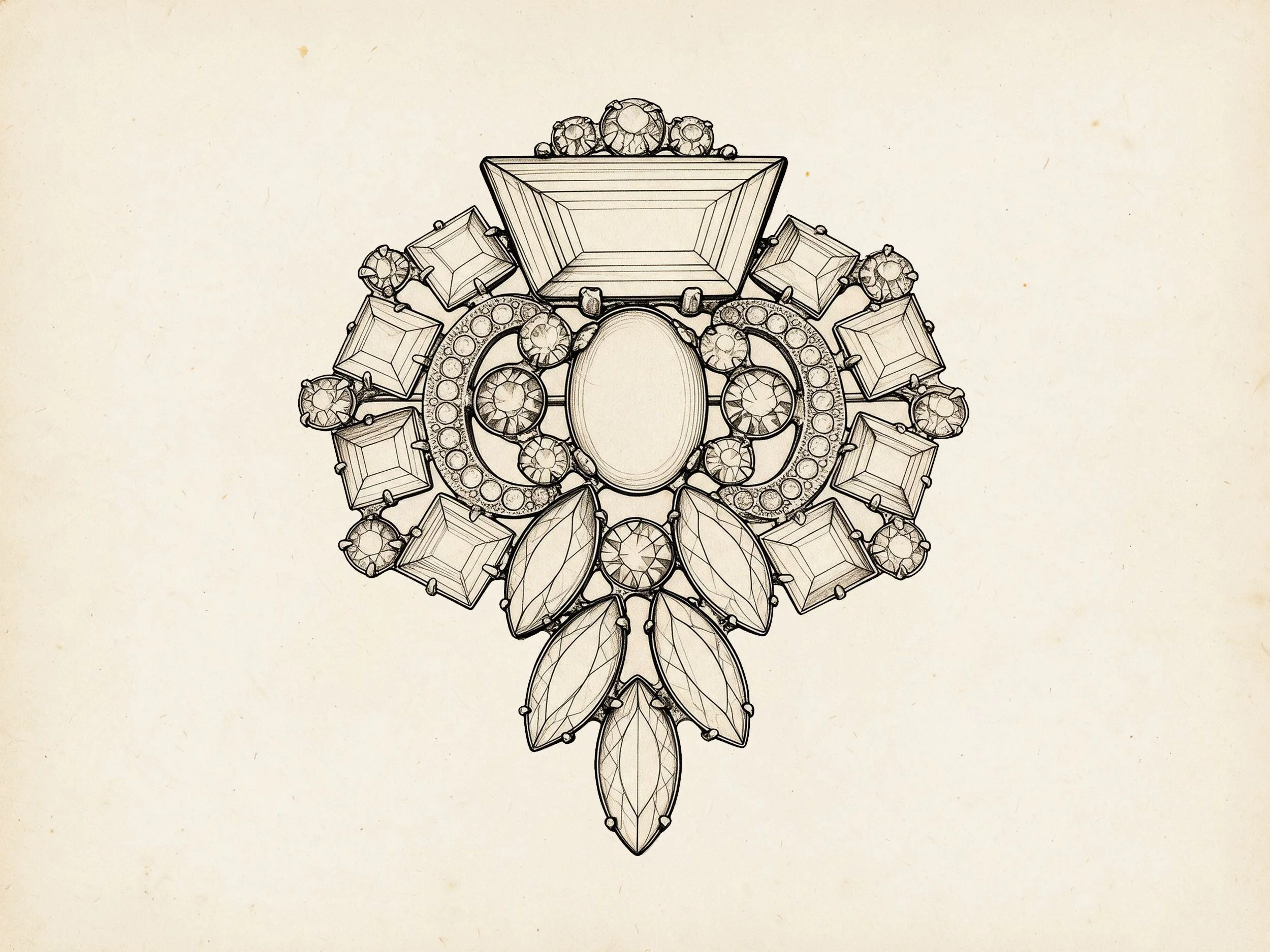
Joseph Wiesner brooch, c.1945
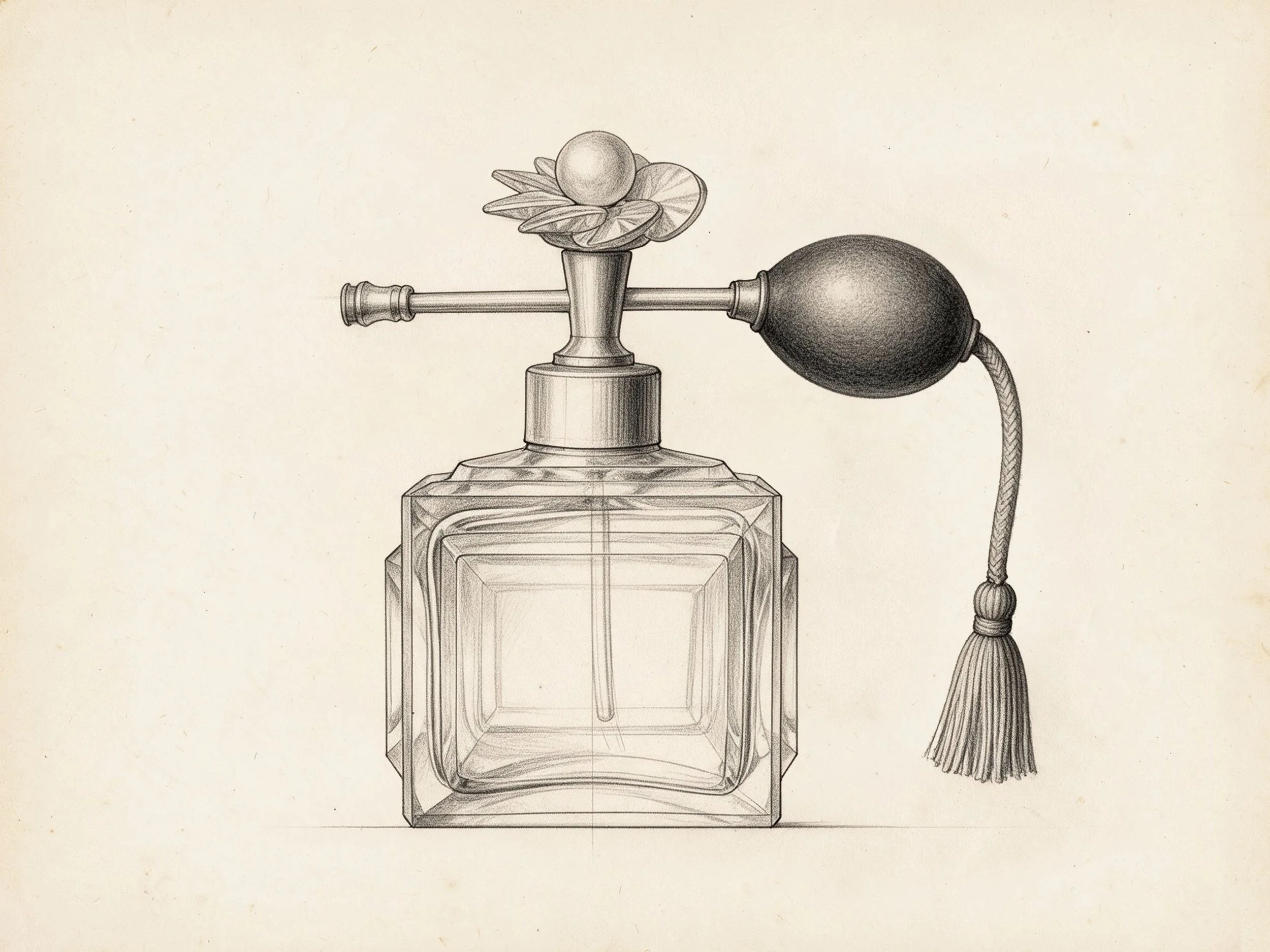
Cut-glass atomiser, c.1930
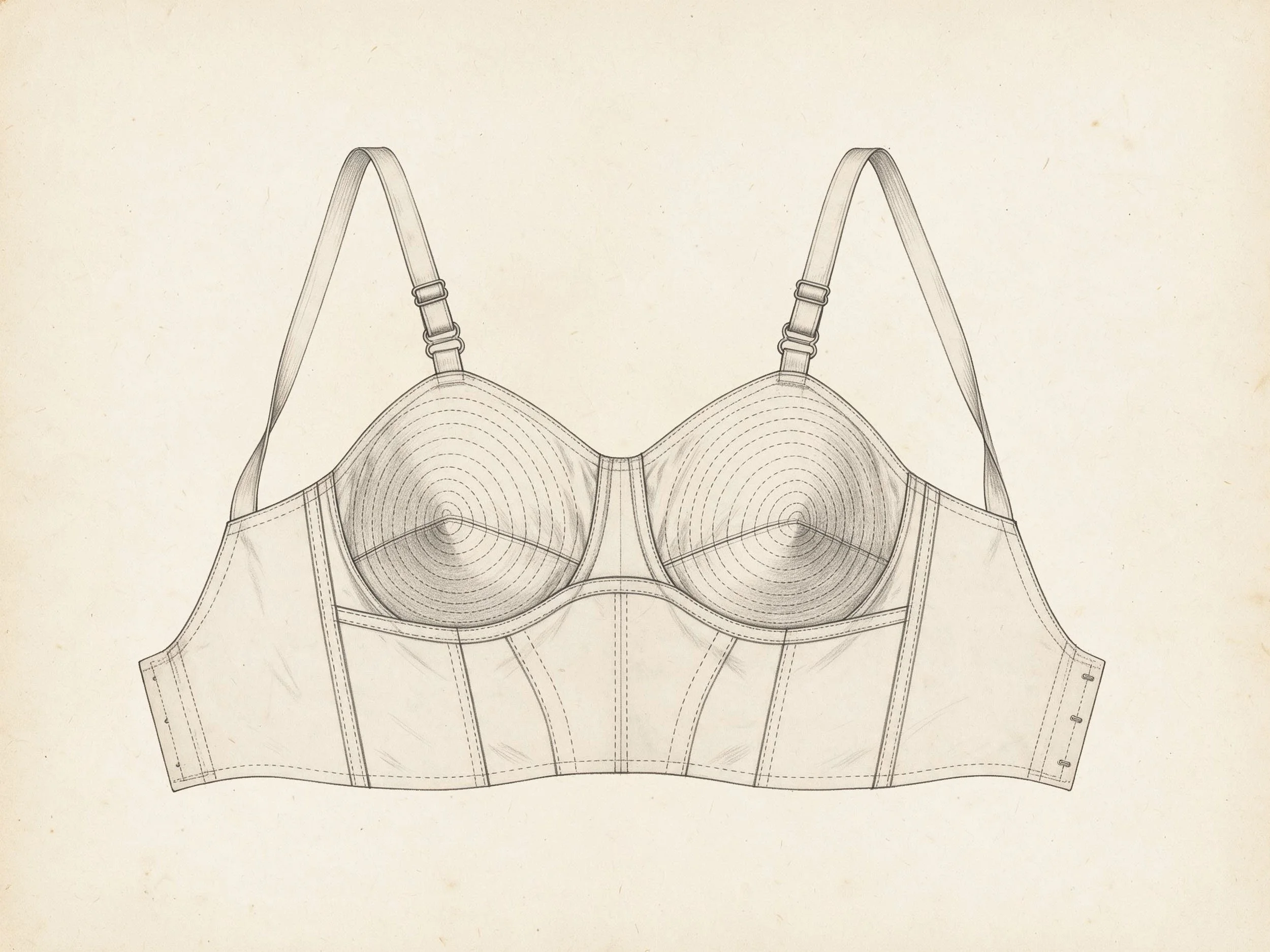
Spiral-stitched bullet bra, c.1952
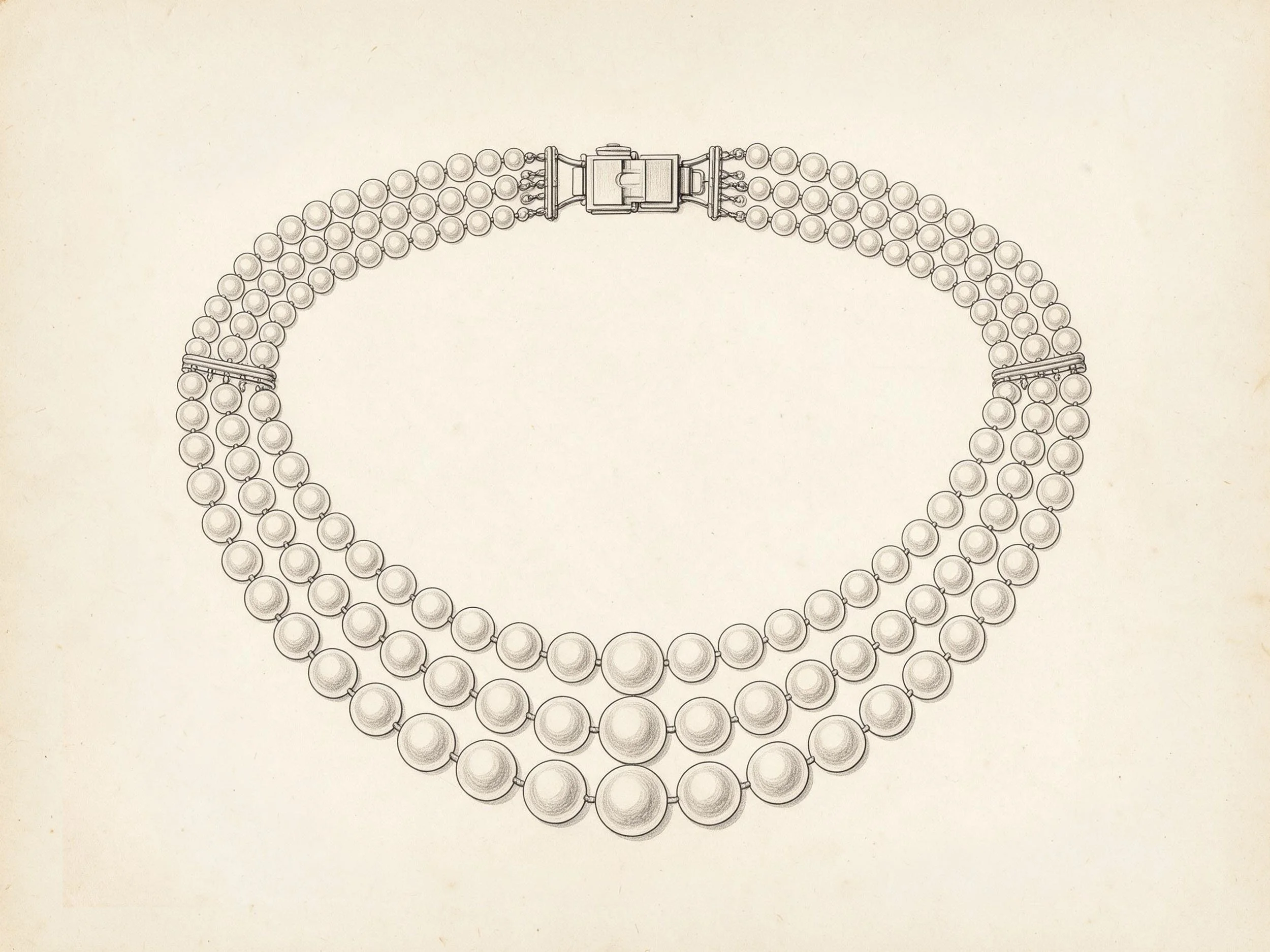
Three-strand graduated pearls, c.1955
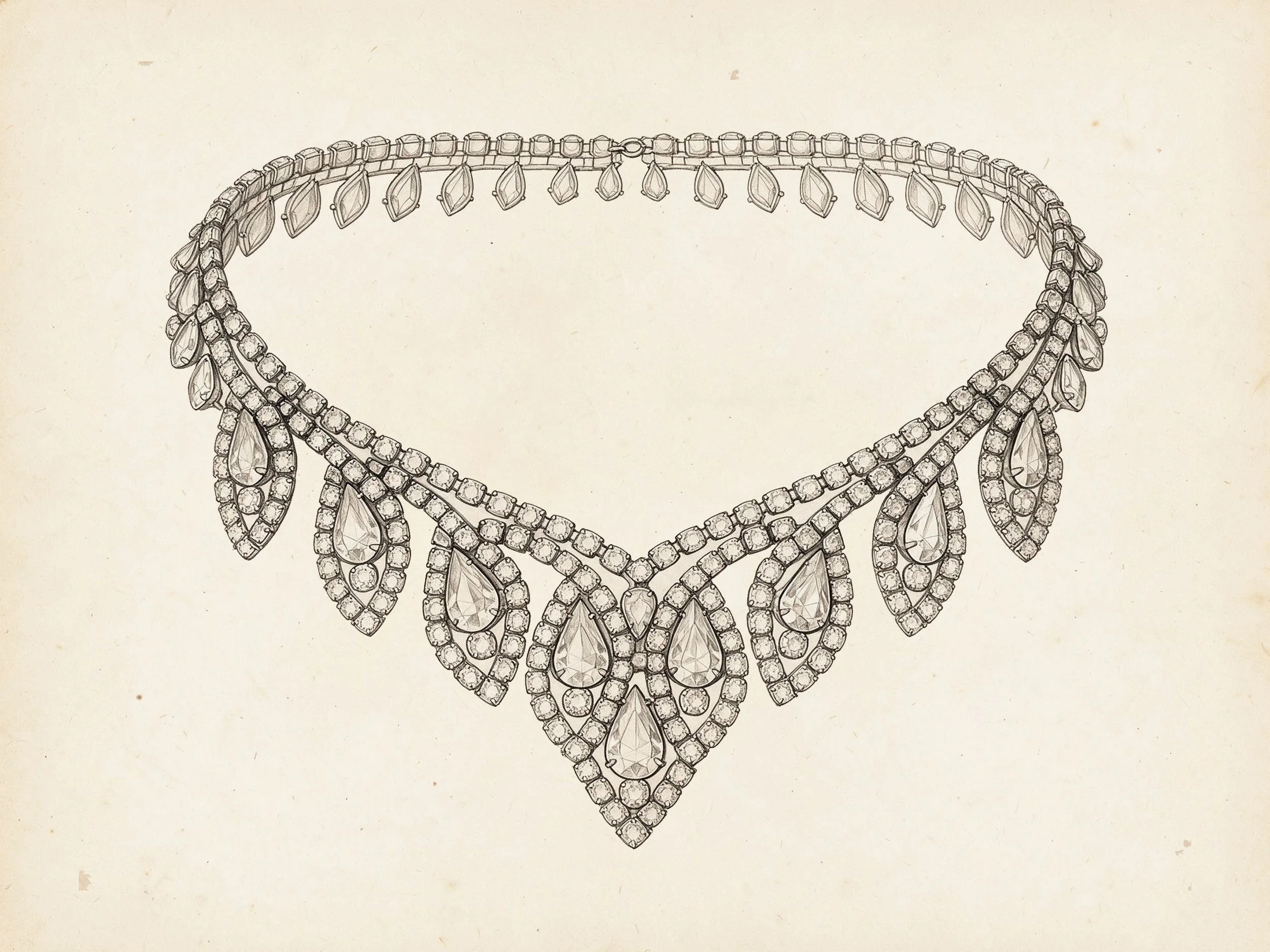
Rhinestone collar, c.1950
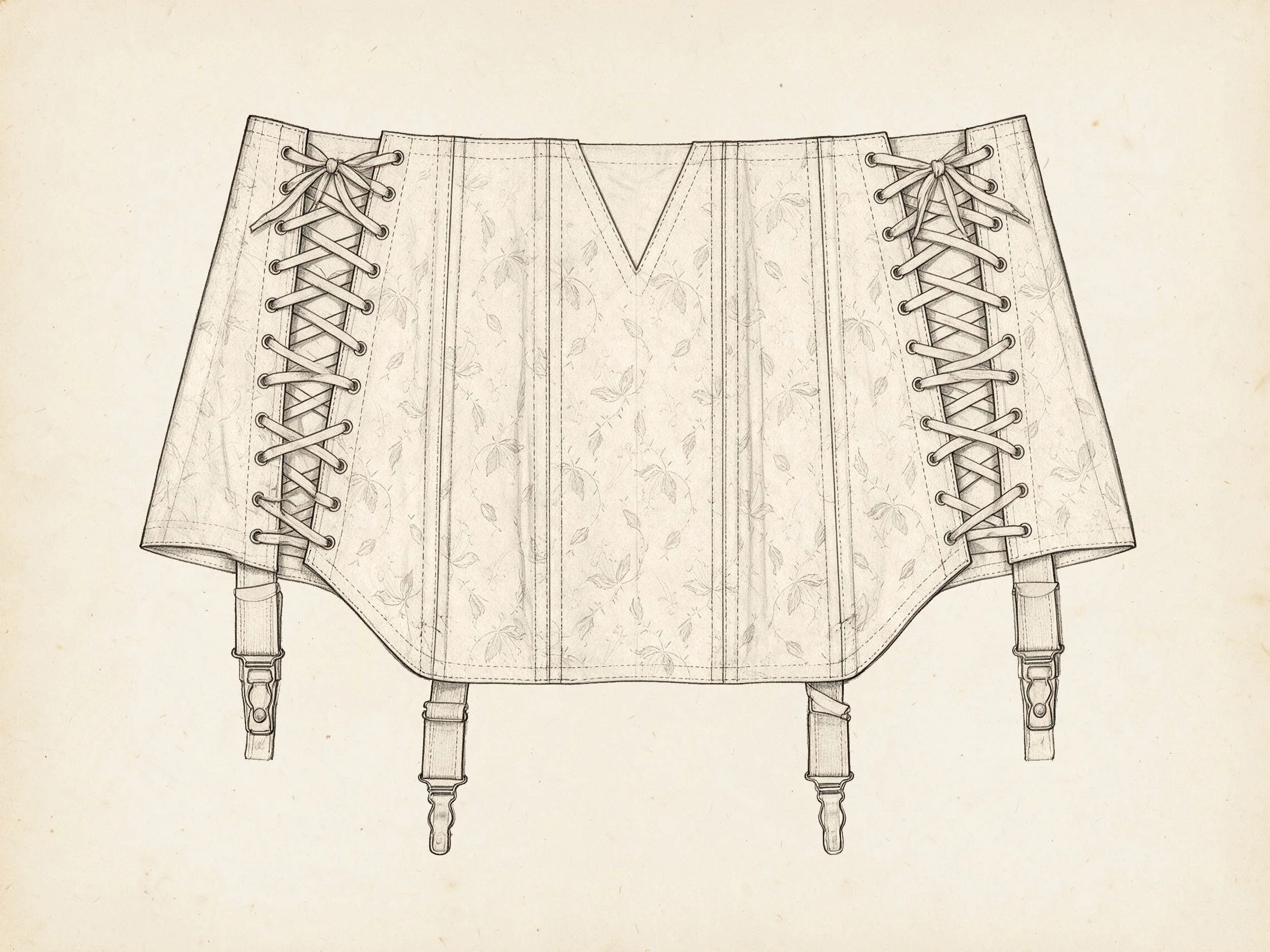
Berlei laced girdle, Australia, c.1955
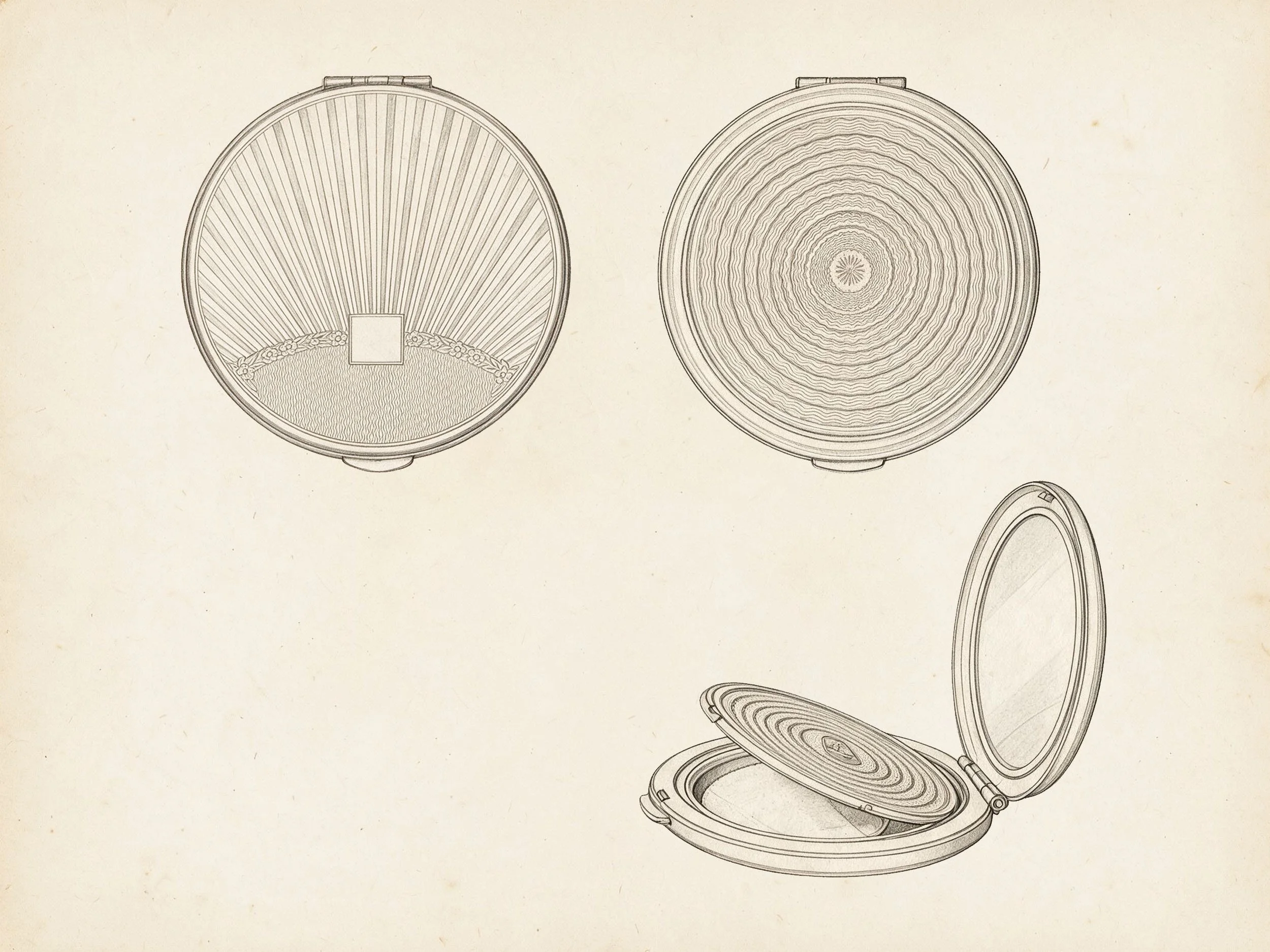
Kigu powder compact, c.1955
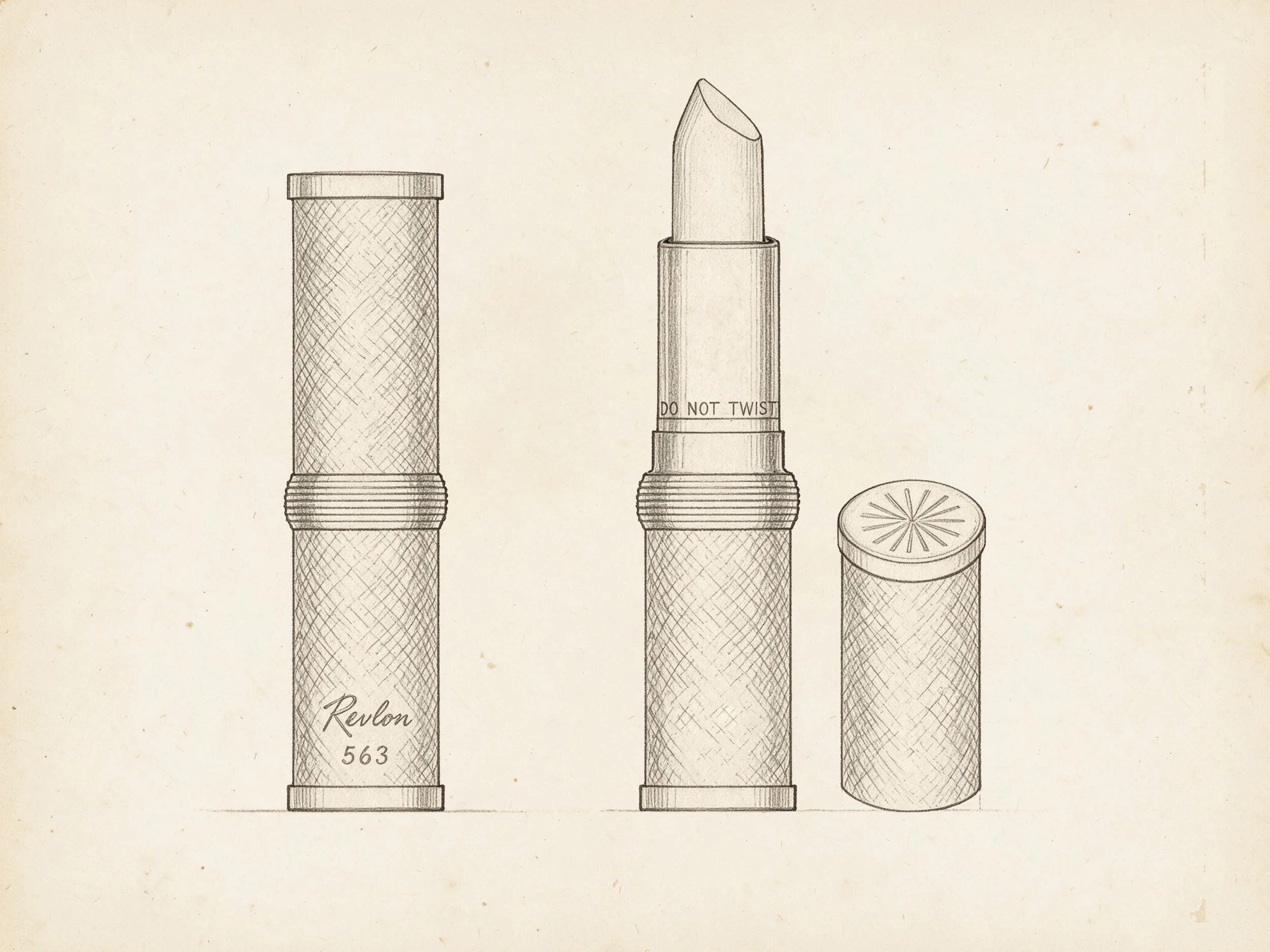
Revlon lipstick case no. 563, c.1955